Wednesday, October 15, 2008

Chicago International Film Festival 2008 - Preview

Wondering what to see at the Chicago International Film Festival? Take some tips from a veteran fest-goer.

I think it was TimeOut Chicago that opined that the rookie mistake is to attend films that have distribution and are coming back soon in regular runs. That's actually rather sophomoric advice in my experience, because the truth is that if it's actually good, it almost always comes back eventually (though that's somewhat decreasingly true now with indie distributors dropping like flies). In other words, if you focus on films that won't be back, then you'll be watching some time wasters. My advice, if you're looking to see more than a couple films, is to get a nice balance between films likely to return and films that haven't been picked up yet. But the most important advice I can give is see what appeals to you. Don't just go by the critics. Look at trailers online. And take some chances.

Here's another pointer you won't get from the local papers: 600 N. Michigan is a terrible venue for foreign films. If you're used to stadium seating (and who isn't?), you're going to hate trying to read subtitles over people's heads at this outdated multiplex. Unless you're really tall or just really tolerant of discomfort, don't see subtitled films there. CIFF shows sell out, especially after the first weekend, and remember you're paying pricey ticket fees. Here is your mantra: the good ones will come back, the good ones will come back.

Films I've bought tickets for so far:
Julia - it's Tilda Swinton getting back to her edgier roots in a film with a crazy kidnapping plot; no local reviews so far, and it may not be back

Of Time and the City - Terrence Davies documentary about Liverpool has gotten rave reviews in Europe, and I've enjoyed other docs about places, like Los Angeles Plays Itself

Quiet Chaos - I'm taking a chance on this one, reviews are more mixed, but I have an interest in Italian film generally and liked Nanni Moretti in The Son's Room - may not come back

Revanche - Austrian thriller, excellent revs so far, just had its N.Am. premiere in August at Telluride, on the verge of being picked up for distribution

Tokyo Sonata - I've missed the boat on Japanese director Kiyoshi Kurosawa so far; this is supposedly a turn away from the J-Horror work that established him, but it's reputed to be all the stronger for it

Films I want to see but am passing on - for now:
Christmas Tale - the other big French film at Cannes, dying to see this but couldn't fit this in my schedule, and IFC has picked it up

Two Lovers - this "loose rethink of Dostoevsky's 'White Nights'" had polarized critics, and having just (by coincidence) seen and loved Visconti's version I'm chomping at the bit to sample my first film by James Grey, but it's a Hollywood film, will be back early next year

Wendy and Lucy - been excited to see this, too, but it does have a limited release lined up in Dec. from the new (to me, anyways) Oscilloscope, who I'm betting will include Chicago

Let the Right One In - looks like this really cool-looking Scandinavian vampire movie is coming to Landmark within the next two months

The Chaser - I love South Korean cinema, but the mixed reviews on this film have me convinced to wait

Gomorrah - solid reviews for this Italian mafia flick, but I'm confident this will come back

The Good the Bad and the Weird - I'm very skeptical

I've Loved You So Long - critics say it's pretty good and mostly worth seeing for Kristin Scott Thomas, and after seeing her speak French in Tell No One I'm sold on it, but it's coming back to town very soon

The Secret of the Grain - frankly, I'm too excited about this Cesar winner to see it at 600 N. Michigan where I won't be able to read half the dialogue, so I'm taking my chances - please someone pick this one up!

Tokyo! - anthology films are often mixed bags, and early viewers have consistently said Gondry's segment is the best (he's back in form!), Bong disappointed, and Carax has polarized - I'm fans of all three directors

The Wave - this sounds good, based on a book about kids and cults that I had to read in high school, more interesting that's it's now been adapted in Germany

Sparrow - I'm not a huge Johnnie To fan so far, but maybe if it comes back I'll check it out

Ballast - coming to the Music Box very soon, wait and be comfortable

Timecrimes - sounds excellent, but I have a scheduling conflict

Avoid / Wait for DVD:
Cherry Blossoms - the Reader liked it, but everywhere else I've seen pretty bad reviews

24 City - consider me uncool, but this hyped-to-the-skies director is for hardcore artfilm types only - I'd rather watch such difficult material at home on dvd where I can puzzle it out at my leisure

Labels:

Sunday, October 21, 2007

43rd Chicago International Film Festival - Part 2

The Festival has announced its awards, and I'm happy about having seen the Gold (Silent Light) and Silver (You, The Living) winners, though I obviously don't approve of the two awards for Control. I also learned that it was, indeed, Udo Kier (serving as juror) sitting just a couple rows in front of me at the Hallam Foe screening. I'd recognize that enjoyably odd German anywhere (esp. because of his role in My Own Private Idaho). Overall, I had pretty good luck this year picking worthwhile films to watch.

I did my homework for You, The Living (Du Levande), renting Roy Andersson's previous film, Songs from the Second Floor a week before the fest, and while 7 years passed between their makings, the new film seemed to pick up exactly where the previous film left off. Not that you need to see the Songs in order to appreciate the new film, just that they're very much cut from the same cloth. Of the first film, J. Hoberman quipped, "It's slapstick Ingmar Bergman." "Yes," added Roger Ebert, "and tragic Groucho Marx." Tati comes to mind, and to some degree the film Delicatessen. Filmed all in long shots, both of Andersson's films portray a bleakly surreal cityscape and hop from character to character, sketch-like, with the grimmest sense of humor. There is very little in the way of a narrative thread connecting them except that they are all residents of this comic dystopia. Almost all of them are middle-aged or old, rather unattractive, sadsack in dozens of unique ways. I think there is one child in all of Songs but there are some major characters in You, the Living in their twenties. Songs struck me as a meditation on a graying Europe and the ills of modern society, whereas You, the Living had me thinking more globally, but that might be an effect of my catching up to Andersson's vision. I felt that some of the scenes in You reach higher comic heights, but there are several scenes of questionable purpose which fizzle. It sags at times, but I'd still strongly recommend it overall. Rating: 3 out of 4 stars.

There's no way I was going to miss The Witnesses (Les Témoins), the new film by André Téchiné, and I was a bit disappointed in the lack of coverage the film received during the festival. Téchiné is a major filmmaker who's beginning, it appears, to be taken for granted, which is too bad because this AIDS drama set just before and during the initial outbreak in France is clearly one of his very strongest works, along with Strayed, Les Voleurs, Wild Reeds and My Favorite Season. In fact, it was one of the strongest films I caught at the festival. Téchiné is a subtle filmmaker who can sometimes be too refined and unsentimental for his own good, as in Changing Times and Far Away--he can leave you feeling nothing. But, as with the backdrop of WWII in Strayed, here the emergence of AIDS provides him with some strongly charged material to resist, creating a more effective tension. It also provides him some nearly readymade narrative material with which to explore his perrenial theme of the challenges we face in trying to achieve stable identities and monogamous love lives. The story moves from a scene in which young Manu goes cruising in Paris to the story of his affair with the older (unconventionally) married Mehdi, a cop who rescues him from drowning. Their scenes proved genuinely passionate and sexy, and an eleventh hour revelation keeps the relationship interesting from beginning to end. The cast is excellent: Emmanuelle Béart rarely better, young Johan Libéreau is entirely believable as a smart young man from the provinces who manages to fascinate two older rival lovers. Julie Depardieu (yes, daughter of) is excellent as the sister preoccupied with her opera training. A scene in which she performs an aria and the lights go out is a rare emotional indulgence on Téchiné's part, and it works beautifully, suggesting the blindness that a character experiences as his disease develops but also a society struggling to adapt to dangerous circumstances. Sami Bouajila has had quite a year, first with Days of Glory and now this turn as a bisexual cop. I was also pleased to see Xavier Beauvois and Jacques Nolot (two notable French directors) turn up in small supporting roles, and I should also note that Téchiné is one of the few French directors who has shown a committed interest in his nation's relationship with Algeria. My only real quibble is that a minor American character who turns up late in the story has a ridiculous accent. Rating: 3 ½ out of 4 stars.

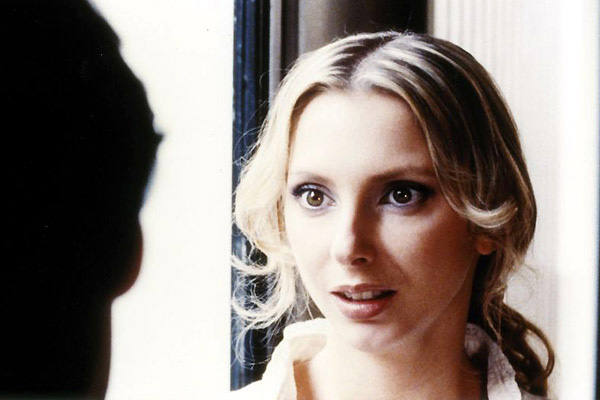
Bad girl Catherine Breillat's latest picture The Last Mistress (Une Vieille Maîtresse) is a deliciously dark erotic costume drama in the vein of Dangerous Liaisons. Not coincidentally, Laclos is mentioned more than once by the characters in this film. The film has garnered positive reviews so far on the fest circuit but star Asia Argento has gotten raves for her turn as a scandalous Spanish countess who struggles to hang on to her young French lover as he jilts her for a respectable marriage to an almost sickeningly pure young maiden. Breillat's trademark sexual provocations are on full display. The pretzel positions she films the lovers in are designed to shock, and I thoroughly enjoyed the gasps and squeamishness of some of the older women in my row. (The lady next to me nervously rustled her plastic bag every time Argento appeared nude.) Argento's countess at one point takes a blade to her lover's face and in another, vampire-like, licks blood from a bullet wound he received in a duel over her. (Hilariously, the attending doctor replies to her query of concern by pointing out that her ministrations have just added a risk of infection.) Fu'ad Ait Aattou as the lover Ryno is a typically indulgent casting choice on Breillat's part (she who has been known to cast porn stars as leading actors). He looks like a high-fashion magazine model, and I initially pegged him as a substandard Louis Garrel type, but he turned out to have somewhat more in the way of chops than I expected. I was most charmed during the first two-thirds of the film when Ryno spends an entire night relating the story of this affair to his proper young fiancee's grandmother, played wonderfully by Claude Sarraute. As the Marquise, she insists that she comes from the more liberal generation of Laclos and is unshockable, yet she urges him on in his storytelling, clearly finding it more interesting that any novel and rightly so--the story has some unexpected twists. But the last third of the film, taking place after Ryno's marriage, seems less urgent, as if Breillat loses interest once the tragic ending comes into view and the fun must come to an end. Characters' deaths are related off-handedly and before I was quite ready for it, the show was over. Still, I feel this is a major rebound for Breillat, whose films had begun to feel played out and unenticing in their post-feminist games. It's certainly her best since Fat Girl, and I hope it's a huge arthouse hit here in the U.S. Rating: 3 ½ out of 4 stars.

I'm still trying to sort out what I think of this boom in ultra slow-paced films on the international scene. Kiarostami, Zhang Ke Jia, Ming-liang Tsai, Nuri Bilge Ceylan, Sokurov, Angelopolous, Bela Tarr, Hou Hsiao-hsien, and many more celebrated filmmakers of various origins, styles and concerns have all embraced a slower than average pace. Meanwhile, classic filmmakers who pioneered this "contemplative cinema" such as Dreyer, Antonioni and Tarkovsky are being praised for precedent. Obviously, few critics celebrate all of these directors equally, but in general I get the sense that highbrow taste favors them over all. I try to make a point of mixing some of this work into my filmgoing because I find it challenging, and I've taken a policy of seeing no more than one or two at film festivals because when they fail they can be very enervating. Worse than merely sleep-inducing at their worst, they can put you off wanting to see any cinema. I've seen Carlos Reygadas emerge during this decade as yet another name to add to this, championed for his Japón, generally excoriated for his Battle in Heaven, and now getting the best reviews yet for Silent Light (Stellet Licht), and as the trailer intrigued me (and since what I read about the new Tarr film didn't encourage me), I decided this would be my token slow film of the festival. I'm glad I saw it, but in the end I'm not quite sure how to evaluate it. It's one of those challenging films you want to argue about even with yourself, a perfect example of why such films are worth seeing.

The film opens with an incredible sequence, near darkness until you realize it's a starry sky. You begin to realize the camera is panning through the night, you sense shadows, the outline of trees, and so gradually as the screen brightens, you realize you're seeing a sunrise. Somehow the film seems to capture the moment in real time yet I suspect it must somehow be compressed. Silent Light is the story of a Mennonite farmer in Mexico (they speak Dutch, I believe) and his wife and rather large, handsome family but more to the point, it's about his struggle to deal with his feelings when he falls in love with another Mennonite woman. And here's my first problem with the film: the women seem very much alike to me, and I never got a clear sense of what he preferred about the new woman. The film is acted with non-actors, actual Mennonite farmers who do a very good job as non-actors, but then, the stiff style of the filmmaking lowers the bar a bit, I think. The lead actor Cornelio Wall cries a few times on screen, and to see such a stoic man crying can't help but win some of our sympathy (not to mention admiration--it must be tricky to cough up tears on command), and he's really quite up to the task of holding our attention most of the time, at least at this pace. During one serious moment I caught Peter Wall, who plays (and, surely, is) his father winking at the camera, and I wondered if it was a mistake - if the actor had thought the shot long over only to discover Reygadas keeping the camera going. Did Reygadas keep this shot in knowing it might call attention to the style? Why? There's some business with a clock being stopped and started again that subtly lends an air almost of science fiction or fantasy or fairy tale to the film. Silent Light is generally always beautiful to look at, and I was content enough to go along for the ride, but then came the ending. Suffice to say that something miraculous happens but (rather pointedly) because of an action that's human and not divine. I'd read the ending was compared to a bit of deus ex machina at the end of Dreyer's Ordet (a film I haven't yet managed to see), and I was both surprised and pleased that I still hadn't guessed this ending. The film ends with a sunset to match the wonderful opening, and I felt reasonably satisfied as I left. But when I thought about the film some more, I began to feel this ending is a cheat. (Actually, a cheat compounded, because there's a death in the film that feels very, very unlikely and unrealistic to me.) Here's one way in which the slow pace really works to a director's benefit: it can hypnotize the audience into a dreamlike frame of mind in which we're less likely to balk at such an unlikely leap of logic. (Just as a frenetically-paced film can exhaust us into acceptance.) I often feel that slow, languorous shots should be used for emphasis. Rare is the stylist like Sokurov of Wong Kar Wai who can build an entire dreamlike movie out of them. Usually when they're used for an entire film, it's like highlighting an entire novel's text--useless. During such films, I find that rather than doing more "contemplation" my mind simply slows down. I don't mind a provocative ending or a stylistic departure, but here I didn't see the purpose (at least not a good one). Still, the ending aside, I enjoyed the sumptuous photography and the sense of getting to experience the lives of character who live very differently from me. And perhaps I'm overthinking the whole thing in this case. Rating: 3 out of 4 stars.

Update: so far I've found two other bloggers who blogged from the fest, Nick and Prince of Cairo. Nice work, guys.

Labels: ,

Thursday, October 11, 2007

43rd Chicago International Film Festival - Part 1

First stop for me on this year's Festival Express was Hallam Foe, and if ever there was a twisted film, this is it: voyeurism, incest that isn't technically incest (stepmom, lookalike mom), blackmail, murder, split personalities--this thriller has enough material for half a dozen stories. It doesn't delve into any of these issues or ideas with enough dedication to really achieve anything significamt, but it's an agile, interesting film, and it succeeds as a naughty entertainment. It seemed to please my audience as a small-plates meal of thrills and titillations that doesn't try to implicate or embarrass us. This Scottish import (from the director of the darker, less entertaining, but more artistically satisfying Young Adam) grabs inspiration by the handful from Hitchcock's Vertigo and Rear Window (hey, steal from the best) and also brought to mind (would you believe?) Italo Calvino's The Baron in the Trees, since the title character spends some significant time on rooftops and in trees. Earlier this season I rented the much-ballyhooed The Lookout, a dud of a thriller notable for one main reason, the commitment of its young leading man, the impressive Joseph Gordon-Levitt. This film is likewise notable for the tour de force performance of Jamie Bell, who elevates this film far above what it could have accomplished otherwise. The actor, who as a teenager beat out Tom Hanks, Russell Crowe and Geoffrey Rush for a BAFTA award for his first film performance in Billy Elliot, has more than proven himself, and with films such as Undertow, Nicholas Nickleby, and Flags of Our Fathers, he's clearly shown an intriguing taste and intelligence in picking roles so far. Jamie Sives (who I'd seen play Peter Mullan's son in On a Clear Day) also seems like an actor to bet on. I was less taken with Claire Forlani, though admittedly she's successful as an evil stepmother (whose motivations remain too murky and whose reactions seemed unbelievable). Sophia Myles manages well with a part that seems impossible in theory, and in fact, of all the unexplored stories that could have been fleshed out here, the one that seemed most interesting to me is the one her character hints at: a woman who discovers her new young lover is rather damaged goods but decides that indulging his idiosyncracies may go a long way to cure him. Rating: 2 ½ out of 4 stars.

As it was to Mr. Lazarescu before it, the fest circuit has been very good to 4 Months, 3 Weeks, and 2 Days, a Romanian drama about a young woman helping her friend obtain an abortion illegally in the 1980s. I found Lazarescu eventually oustayed its welcome, become unbearably tedious as it entered its third hour, but I had the opposite reaction to 4 Months, which is more like a Dardennes film than Lazarescu. If anything, it was too unbearably unnerving. I'll confess, I considered leaving. Absolute horrors take place (some of them happen, brilliantly, off screen), and I expected worse and worse things to happen. I still feel a bit queasy about the filmmakers' motives (some of the characters' decisions are unlikely in a way that smacks of rub-their-faces-in-it), but I suppose it's impossible to argue against the notion that it can help us appreciate the ramifications of the debate over abortion. Secondhand, I've heard it described by a critic as a film which presents us with standard thriller and horror narrative routes only to take a more intelligent turn at every opportunity--and that's excellently put. What interested me just as much, I guess, was the way the film shows people dealing with one another in this Communist society, the black market everyone traffics in (the film opens in a college dorm in which everyone seems to be dealing in soaps, cigs, you name it). And perhaps the most inspired narrative decision is to have the heroine become obliged to leave a hellish situation temporarily and show up at her boyfriend's mother's birthday party where she has to put on a happy face and ignore some of the older guest's intergenerational put-downs. The Romanian New Wave, as its being called, may be an exaggeration, but this film is undoubtedly one of the more challenging, artful and serious films of the year. (And it could instantly be added to that Onion list of great films too painful to watch twice.) Rating: 3 out of 4 stars.

I was not so impressed with Control, a film generating a lot of buzz online at the moment. Because Anton Corbijn's music video work has been featured alongside the likes of Michel Gondry and Spike Jonze, I couldn't help hoping his feature debut would be better. It looks good, certainly, shot in black and white for starters, something I couldn't help but admire. But the comparisons to kitchen sink realism don't really ring true for me, as the visual style here is all about de-cluttering the frame and lovingly portraying the hero to the point of hagiography. Some shots called to mind Jeanne d'Arc or St. Sebastian. Yet the story (taken from the deceased Ian Curtis's wife's book) reveals him to be, sorry, an asshole. You might argue that the film creates an interesting tension, then, between the diverging visual and narrative approaches to the subject, but I don't see it that way. Curtis-the-character comes off as a man who proposes marriage and childraising only to suddenly turn around and change his mind, which would be one thing (he's human, they're really young), but he's also a coward about expressing what he wants, going silent and pouty just when his wife (played excellently, of course, by Samantha Morton) needs him to be frank. The film tries to pass him off as a rock 'n roll Wordsworth or Keats, too sensitive for this world (or, at least, for conventional monogamy), but it just left me with a bad taste in my mouth. Schmucks can make for good drama, too, of course, but I got the uncomfortable feeling that Corbijn could never bring himself to deal with the ugliest aspects of the story, so how could he be expected to provide some perspective? In terms of musician biopics, the film does show more taste and greater ability to sidestep cliches than recent Oscarbait films like Walk the Line, but I still can't quite recommend it. I'm not even sure die-hard Curtis fans would like it - it might even offend them most of all. Rating: 1 ½ out of 4 stars.

Labels: ,

Wednesday, October 03, 2007

43rd Chicago International Film Festival: Introduction

Next week is the Chicago International Film Festival. The Trib has a piece on colorful Kutza and Ebert contributed a modest write-up. There was a bit of a kerfuffle when Chicagoist recently wondered why the schedule wasn't out yet. (In my opinion they jumped the gun--the fest was on its normal timetable.) The comments (which you now have to click on "Show comments" to see fully) were, as usual with the Internet, disheartening and catty.

At any rate, my opinion of the Fest is about the same as ever, though it seems less international this year than most, and it's much more expensive. (And no one has commented on the missing critics' choice series, which was always one of my favorite sidebars.) CIFF is generally free of the commercial ickiness of Toronto, but also (partly as a consequence?) much of the excitement. More than a couple of the high-profile films it gets are (I would guess) prints that would normally be used for sneak previews for films that will open commercially within the month. Which brings up another issue: with the Oscars moved back a couple years ago, October has more than ever become the biggest month for grown-up films, more crowded than ever, so if there's one month we really don't need a festival, it's October. I wish it could be held in late summer, during the worst film year doldrums. General filmgoers could be excused for thinking they could put together a better film festival (and more cheaply!) at the cineplex screens down the hall. (In fact, last year I ditched one CIFF fiasco and went down the hall to see the film that ended up winning the Best Picture Oscar, The Departed.) [Update: evidence I'm not the only one who thinks October has become glutted.]

Still, though it brings few of the biggest buzz-generating titles on the fest circuit, CIFF always delivers more than you think it has on first inspection--and the internet has made it much easier to research films on the int'l fest circuit. I love the way the fest's depth (it's much bigger, if less choosy, than the NYFF) means you can talk to 5 different friends all going to see 10 films and discover none of you are seeing the same films.

My definite picks so far are: Hallam Foe, Control (turning out to be a big draw), 4 Months, 3 Weeks and 2 Days, The Witnesses (it's Techine, who I never miss), and The Last Mistress. I'm going to try to add You, the Living (after watching the director's Songs from the Second Floor last week) and Silent Light (which'll be my token slow artsy choice--I'm going to try Reygadas with what they say is his best rather than revisit Bela Tarr with his latest, which has gotten poor reviews so far).

If I had but world enough and time, I'd add: Before I Forget, The Girl Who Leapt Through Time, Chicago 10, The Flight of the Red Balloon, Before the Devil Knows You're Dead, Lars and the Real Girl, and Beaufort. Luckily, many of those are coming back, some of them (Devil, for example) very soon.

There are lots more highlights not quite to my taste: glitzier events with directors and actors (the Affleck brothers, Tilda Swinton, Marc Forster, John Sayles), lots more documentaries, and, egad, The Kite Runner. The ubiquitous Kite Runner.

Labels: ,

Friday, October 20, 2006

42nd Chicago International Film Festival - Part 2: Chicago (1927), Climates, and The Fountain

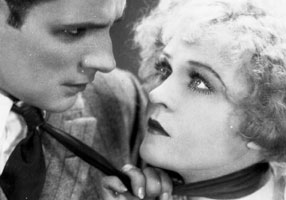
For me the biggest treat of the Festival turned out to be the original 1927 silent film version of Chicago. A lecturer explained that the story had been written by a journalist-turned playwright who'd originally covered the story of the real-life criminal that Roxie Hart is based on--Maureen Watkins and Beulah Annan, respectively. Velma, the other killer character we know from the recent musical version of the story, is based on another killer named Belva Gaertner. (Trivia: and what was it that pushed Beulah and Belva off the front pages of Chicago papers? Why, Leopold and Loeb. Unbelievable.)
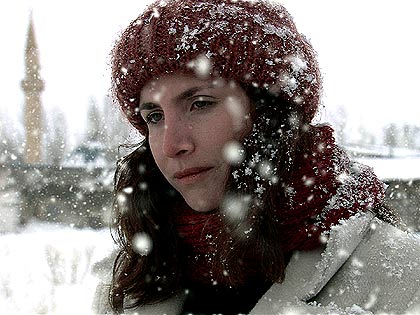
Speaking of the recent movie musical version, it was great fun to see the similarities and differences in the story. (I have to see the Ginger Rogers version sometime and complete my Chicago trifecta.) Large chunks of this story were VERY similar, but there was a section in the middle that was completely different. The biggest difference involves Amos, lovable schlub in the musical. In the ’27 version he’s more of a hero. (And handsome! The actor's name is Victor Varconi, a screen name--could you have guessed?) The film beautifully shows his love for Roxie and what he suffers for that love. He only has half the $5000 Billy Flynn demands to save his wife, so he robs his money back from Flynn at night to pay the “other” half. That action sequence is the major departure—but Billy Flynn figures it out and sends heavies after him at the end. Other big differences: there’s a “good” woman who loves Amos hopelessly as he loves Roxie pretty much hopelessly. Also, Velma doesn’t appear until the end, unlike the recent musical in which they’re in jail at the same time. The film’s a comedy, in the main. The courtroom sequence is a riot--with a trio of gum-chewing flappers transfixed by the goings-on. The genius is in how the story is told using imagery--the way Roxie ingeniously uses her panty hose to solve a number of problems in the opening sequence, for instance. It's a reminder that silent cinema is the purest cinema, in many ways. It's not the subtlest art form, to be sure, but once you adjust to the style and technique, you're in for a grand time. Phyllis Haver is outstanding as Roxie, inventive and riveting in her portrayal of a shameless con artist who thinks she can use sex to get absolutely anything she wants. The film balances broad moralism with sophisticated comedy, an absolute crowd pleaser. If you ever get the chance to see this (esp. on the big screen), you won't be sorry. Rating: 3 ½ out of 4 stars.

Climates turned out to be about what I expected. I'd seen director Nuri Bilge Ceylan's previous feature, Distance at a previous installment of the festival, and I felt it was visually gorgeous but rather lacking in narrative. It focused one relationship--between two brothers, as I recall. Climates does the same with the relationship between a man (played by the director) and the on-again, off-again romance he has with his young wife (played by real-life wife Ebru Ceylan) and an old flame. The settings are scenic and evocative--since he is studying architecture, they travel to see ancient ruins and temples around the region of Turkey. Some of the camera moves are stunningly powerful--there's a scene in which we see Isa studying a temple and the camera focuses on him until the end, when Isa moves and we finally see what he's been seeing, and it's amazing--but without a more eventful story, I think audiences will be tempted to read too much into every little detail. When a camera move becomes a major event in its own right, what does that say? It's minimalist in its narrative, ok, but it's not really satisfying as a psychological portrait because it doesn't go deep enough. It arouses our curiosity (why is she crying? what makes them behave this way?) without giving us something to further our response. So, in a sense, it's superficial, yet it's refreshingly uncommercial. It feels transcendent and leaden at the same time. I think Ceylan would make somebody a hell of a cinematographer, but here he's like Climates' Isa, a perpetual student who lacks the ambition to get his degree and really achieve something. I'm glad I saw the film if for no other reason than that it turned out to be one of the most gorgeous film I've ever seen (at least since Russian Ark) that was shot on video--in fact, I didn't even know it was video until later. It actually looked just about as good as film, and that's something I rarely say. It gives me hope that cinema has a beautiful future after all. Rating: 2 out of 4 stars.

I'm still pondering Darren Aronofsky's The Fountain a couple weeks after seeing it. The film is boldly original, looks great, with good performances (considering the script), but I'm not exactly sure what it's meant to say--and I mean on a basic expositional level. Aronofsky fumbled it in the editing room, that was my first impression. It should have been a bit clearer what the relationship between his 3 storylines is. But as I read and think more about the film, I'm beginning to think maybe it all makes sense, sort of, if you squint just a bit. So that leaves some other problems--what is it saying beyond the expositional level? One, actually two, of the storylines have a conquistador as a hero. Stop. Just think about that a second. Can you really get behind that notion in this day and age? Second, it has the whole damsel-in-distress versus male hero of action set-up (gag), though it is romantically done. Lastly, it has a scientist hero basically trying to exploit the environment for his own selfish gain--he is seeking immortality. He's in denial about death itself. To be fair, though, the film is probably critiquing him on these later points. I hope. Problem is it's not clear, at least to me. It's either the embodiment of some of our culture's worst traits, or it's a haunting depiction of a man trying to overcome those traits and find inner peace and acceptance. I hope for the latter, but I fear the first. All that rather heady stuff aside, the film looks wonderful. The material about the Inquisition is remarkably done, and there are some beautiful cinematic moments--the comparison of two men going to the city to do battle; the image of a man whipering to an ebbing life (its hairs quivering). There's also some really cheesy moments, as when Hugh Jackman meditates Buddha-like in the middle of time and space in a magic bubble. Ugh, I'm turning against the film again just thinking of it. Worst of all, Aronofsky still has this terrible problem of repetitiveness. As in Requiem for a Dream, he tells us this same story in several different storylines at once. Mr. Aronfsky, here's a concept for you: comparison AND CONTRAST! Theme AND VARIATIONS! And I love Rachel Weisz too much to see her reduced to this sainthood and martyrdom act. I'm trying to be generous here, but this is foolishness. Aronofsky is zero for three in my book, but one of the most interesting failures around. Rating: 2 out of 4 stars.

Labels: ,

Saturday, October 14, 2006

42nd Chicago International Film Festival - Part 1

I didn't expect much from this year's fest as it's been a poor year for film so far, but the CIFF really stunned me with how much junk they imported. I usually see the Fest as a chance to go fishing for lesser-known gems that may not make it back, but this year I changed strategies completely and decided to go for a mix of films that are coming back soon in the always-overcrowded fall season along with some lighter fare that looked more fun than important. So far, I'm doing better than last year.

I never would have expected Change of Address to be my favorite film of the first week. On the contrary, I expected this light French romantic comedy to be a pleasant way to balance out my pass, which it certainly was. But it turns out it's that rarest of things, a comedy that's gracefully light on its feet, tightly edited and breezily enjoyable. Yes, it has a bit of the sitcom to it, but I really loved its touches of absurdity. In fact, it made me think about the subtly different flavors of comedy--wacky, zany, absurd: they're all closely related but different. But there's something uniquely philosophical about the absurd (think Ionesco, Beckett) that gives it a special appeal for me. The hero and heroine of Change of Address are able to live in denial about the most obvious truths (i.e., that they're in love), and the story never forces them to change their minds, which is an odd choice. The way they vigorously pursue their desires and blithely, cheerfully overlook their setbacks put me in mind of the old great screwball comedies in which youthful love seems to offer an endless bounty of hope and happiness. This is a very slight movie--a divertissement--but it was a pure joy for me, and I look forward to seeing what else writer/director/actor Emmanuel Mouret can do. But Frédérique Bel, a cat-eyed comedian compared by some to Lisa Kudrow, made this a real treat. Rating: 3 ½ out of 4 stars.

I decided to check out Just Sex and Nothing Else for a simple reason: I find Sándor Csányi very appealing and enjoyed him in Kontroll, a movie from an earlier fest which was almost the opposite of this film in terms of lighting--dark and gritty where this is light and airy. This comedy of sex and romance from Hungary has several strong features, including a director who knows how to pace this kind of story (a rarity these days, and crucial to a comedy), an attactive cast, and some mildly funny material. Unfortunately, director Krisztina Goda also seems a bit superior to the material at times, clearly in it to establish herself and move on to more pretigious fare (she's working with Joe Eszterhas now). There's a lot of unnecessary cliche and lazy dialogue and after setting up two (possibly three) credible love interests for her lead (played a tad too heavily by Judith Schell), she fails to justify why one lover is more fit than the others. But, no matter, the man fated by formula to be Mr. Right will work out as Mr. Right. Our audience (like voters online) loved the film, and when the director showed up for a q&a at our fest showing, several in the audience clamored to buy the DVD. I couldn't blame them--this is the kind of Hollywood formula film Hollywood often screws up these days. Zoltán Seress is a standout as Mr. runner-up, and Kata Dobó is almost too soulful as the best friend. Rating: 2 out of 4 stars.

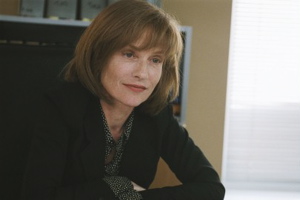
I've been wanting to see more of Claude Chabrol's films. He's been around forever, a French legend often compared to Hitchock, and for someone who loves French film as much as I do, I'm a little embarassed how few of his films I've seen. So I welcomed the chance to see Comedy of Power, a film I've been describing to friends as a sort of French Erin Brockavich, only that's a pretty poor description. Comedy actually concerns a French judge investigating a corporate scandal that is said to be inspired by the real life "Affaire Elf" involving an oil company and dealings with African nations. (An imdb commentator points out that ELF here becomes FMG, one letter's difference.) As she hauls in men involved for questioning and peels back layers of corruption, the tactics against her escalate and her home life begins to suffer. It has a touch of the thriller element to it, but thankfully it doesn't go too far down that well-trod route. Instead, this nimble film mostly sticks to being a portrait of a powerful woman who manages to maintain her confidence in the face of adversity, commandingly acted by Isabelle Huppert. There are subtle touches that reward close attention (the fact that her haircuts get shorter as the months go by, one of the only signs she betrays of being agitated) as well as occasional wordplay (a slick character named Sibaud is called not so beautiful / "si beau"). I was surprised at the number of people named Chabrol listed in the opening credits (music, acting, script), so I was pleased that Thomas Chabrol, as Felix, Huppert's husband's playboy nephew (a bit like Kevin Spacey), proves himself so vital and enjoyable a part of the film. The bond between these two allies is a unique screen relationship and one of many examples of how the filmmakers resisted cliche. Most moviegoers will find it too slight, but it certainly goes down easily and enjoyably. Rating: 3 out of 4 stars.

Labels: ,

Friday, October 21, 2005

41st Chicago International Film Festival - Part 3


My festival experience is over for this year, and I look forward to learning the audience choice awards. The jury awards, of course, have aleady been announced. At this point we're just biting our nails over the audience choice.

Boys of Baraka - A group of seriously at-risk African-American boys are selected from the Baltimore Public School system to spend two years at a boarding school in East Africa, the goal being to give them a chance to turn their lives around, and this documentary follows their journey through surprising twists and turns. Sounds like an Oprah-style, feel-good tale of inspiration, doesn't it? Like you know where this is going? Trust me, you don't. The film reminded me of last year's Born Into Brothels but strikes uncomfortably much closer to home. It raises troubling questions about environment and underfunding of--or at least undercaring for--urban public school students, but those questions aren't explored as much as they could be. The film has some fascinating chapters, though at times I thought the African section was a tad thin. Still, the portraits of many of these boys and their families is unique and powerful--a much richer portrait of poor black men than you'd ever get from Hollywood--and there are some sections (a difficult meeting with parents; a fight between boys) which you can't believe the filmmakers were lucky enough to capture.
Rating: 3 out of 4 stars.

Black Brush - Trainspotting meets Mary Poppins? No, not quite. In this Hungarian slacker comedy, a bunch of guys (actually, 4, like a rock band) are employed to sweep chimneys but make their way into all kinds of mischief, including smoking the poop of a psychedelically diet-enhanced goat. It's inevitably going to be compared to Jim Jarmusch and Aki Kaurismäki, the kings of minimalist comic cool, and in comparison, well, it just doesn't quite measure up. (Actually, I haven't been wowed yet by Kaurismäki, so maybe it measures up there.) It also swipes the idea of a quick comic peek into the consciousness of an animal from Being John Malkovich's chimp. A rambling odyssey that leaves us hanging as if its slacker soul just couldn't muster up the oomph for a payoff--why worry us with potential consequences only to shrug them off?--Black Brush is, however, beautifully photographed in b&w (the filmmaker worked with Béla Tarr), featuring a unique cast and some silly humor along the way (like a funny moment with a nun and a papal web site). Similar in some ways to Kontroll, another hipster Hungarian let down.
Rating: 2 out of 4 stars.

Caché (Hidden) - The title of Michael Haneke's new film echoes with many possibilities as you watch: hidden camera, hidden past, concealed weapon, hidden meaning. The film inventively plays with composition and editing in order to undermine your expectations. This fascinating and mysterious film may attract mainstream moviegoers expecting a Hitchcockian payoff, but I hope they won't be too frustrated by its artful ambiguity. This is no whodunit. Haneke clearly doesn't want you to have the kind of closure that allows you to walk away and forget. He wants to tuck into your brain and make you ponder. Daniel Auteuil plays Georges, a family man who hosts a literary discussion show on tv (sort of a French Charlie Rose). His family starts receiving anonymous videotapes in the mail of an increasingly disturbing nature. His wife, played by Juliette Binoche, becomes understandably agitated, and the situation begins to threaten their relationship. The story probes into an incident from Georges' past, and the more vehemently he denies his responsibility for what happened, the guiltier he seems. Hidden makes for an excellent companion to A History of Violence, though it suffers slightly from the comparison. Both tell the story of a husband/father who is concealing something violent in his past, and both feature moments of shocking violence (there are two moments in Hidden that are extraordinarily startling). In Violence, the hero has tried to outgrow his machismo, whereas here, fear induces him to become (in his wife's words) "a macho prick," which only escalates the problem. In both films, the violence of the fathers threatens to harm their sons, and to set harmful examples. Both also resonate with recent history. Sometimes specifically and sometimes vaguely, Hidden evokes the dread of events in Algeria, Sep. 11th, the Middle East, the war in Iraq, and the troubles in Paris of October 17, 1961 (curiously, the title and subject of another film at the festival--wish I'd caught it.) [The rest of this review is a bit of a spoiler. Highlight the white on white text if you want to read.] The final scene is esp. rich and keeps the story open-ended. In the crowd, you may notice Majid's son approach, but then leave, Georges' son outside his school. What is his purpose? And notice that the scene plays exactly like one of the tapes--we are probably watching the next tape to be mailed to Georges. It doesn't seem to be Majid's son's doing, though we can't be sure. There are two possibilities I see: Majid's son is plotting to kidnap Georges' son for real, or the two are becoming friends in a way their fathers were unable to do. But you still want to know who's sending the tapes? Here's what I think: God.
Rating: 3 ½ out of 4 stars.

There were a bunch of Festival films I missed that I've heard or read really good things about: The Moustache, Gabrielle, October 17, 1961, Play, Once You're Born You Can No Longer Hide and My Nikifor. Ahab will hunt ye down later, fishies.

Song: "The Bleeding Heart Show" by The New Pornographers

Labels: ,

Saturday, October 15, 2005

41st Chicago International Film Festival - Part 2


Mutual Appreciation - An almost documentary-realistic black and white film about a few ordinary 20-something NYC types, Mutual Appreciation is low-stakes storytelling done very well. With a great deal of humor, the film captures a certain milieu (I felt like I was back in my early twenties slacker days) with perfection. It almost doesn't feel like a story, the whole thing is so low-key. But there is a narrative, and it has to do with young adults negotiating their career and romantic confusions with honesty and a good deal of niceness. A group hug is actually used to resolve one dilemma, but the film doesn't feel as sappy as that might sound. Director Andrew Bujalski could be described as a less artistic or ambitious Richard Linklater. Real life musician Justin Rice (of the band Bishop Allen) is charming and clearly musically talented as a Dylanesque musician struggling to start a career. Turns out that Rice and Bujalski (who takes one of the leads) are long-time friends, as in the script, so Rachel Clift's extremely convinicing performance as Lawrence's girlfriend Ellie is that much more impressive (in q&a, the director opined that she had the toughest job). It's the film's realism and believeability that are its greatest strength and weakness--it would bore mainstream audiences, and it could be accused of navel-gazing, but underestimating a film this honest and sweet opens up hypocricies in any audience trying to be equally honest.
Rating: 2 ½ out of 4 stars.

Death of Mr. Lazarescu - The truth is that great film festivals are forums for films that are vulnerable in the commercial realm, films that aren't an easy sell. They may not be easy entertainments, but they're vital to the ecology of film. I'm not sure what to make of this 153-miunte, Romanian health care odyssey--it's clearly an important film, but it's punishing and unpleasant enough that it will have a hard time with word of mouth. The story is simple--an old man's health has deteriorated to a point where his suffering has caused him to ask for help. Along the way, his neighbors are involved and a nurse paramedic shepherds him to the best of her ability through a nightmare of bureaucracy, professional incompetence, systemic breakdown and compassion fatigue. The whole thing is done in close to real time (though it compresses roughly eight hours of night time into about two and a half), and you can't help feeling like an advocate for the ironically named Mr. Lazarescu by the end. After seeing the film, though, I'm still puzzling over fundamentals--the "death" of the title, the significance of certain episodes. If we can trust the diagnoses he receives, then he's going to die soon from one condition, even if the other were treated right away, so this character wasn't designed simply to make a point about the byzantine and malfunctioning health care system. He isn't held up as a Christ figure, but in the final scene he did remind me of Christ being taken down from the cross. Although the first two hours went by surprisingly easily (there's quite a bit of humor), in the last half hour the film became excruciating to me. And yet I respect that. Is it right to expect such a story to feel good? Should we receive catharsis or closure when the film wants us to think about the ongoing nightmare of modern health care? An artistic masterpiece? A work of social criticism? I'm not sure, so I won't even try to rate it, but experiencing art of this kind is important.

Look Both Ways - Probably the most commercial film I saw at the festival, this little Australian film (look, ma, no subtitles!) struck me as a more modest variation of Magnolia, for better and for worse. (Speaking of Australia, Red joked that we may as well see it and get an early peek at the actors who'll be dominating Hollywood in coming years.) Director Sarah Watt's story focuses on characters dealing with the aftermath of a local train accident and a cancer diagnosis of one of the main characters--so why is it so funny? Justine Clarke plays an artist with a macabre imagination, who sees her (narrowly avoided) death in the most harmless of places. These musings are animated in a watercolor style that match her character's watercolor paintings. (These animated interludes remind me of films by Jane Campion, another director from down under.) Meanwhile, William McInnes, a news photographer, imagines his cancer--along with many other modern ills--in photo collages. Naturally, these kindred souls meet and begin a relationship, however ill-advised, of mutual need. (The sex scene between these two worry-warts is almost too hilarious.) There's more substance still in the secondary characters--unlike Mutual Appreciation, the filmmaker dares to have characters who aren't nice--and as meditations on life and death go, this one is quite enjoyable. It didn't tug at my heartstings as much as it could have, but perhaps that's because I've seen about nine other films this week. I thought this was much better than other recent Aussie imports, Lantana and Japanese Story. More than relevant to our post-9/11 lives, Look Both Ways is sure to get limited U.S. distribution. Trailer.
Rating: 3 out of 4 stars.

In other news, we were strolling and enjoying the sunshine Friday (ironically, our day off from the fest, and movies). We walked past hot dog stand The Wiener's Circle on Clark St. (known for their awesome french fries) in the middle of the afternoon, and who should I see sitting inside, staring right out towards the sidewalk? Jennifer Aniston and Vince Vaughn, only two of the most photographed and recognizable celebs of the year. Don't believe me? I'm not the only one who did a double-take.

Song: "Small Stakes" by Spoon (For Andrew Bujalski)

Labels: ,

Thursday, October 13, 2005

41st Chicago International Film Festival - Part 1


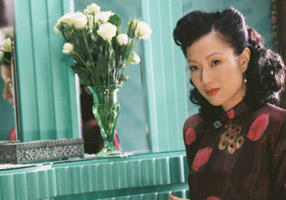
Everlasting Regret (Changhen Ge) - Sumptuously filmed but superficial look at the tumultuous changes in Chinese society from the 40s to the 80s as seen by Qiyao (Sammi Cheng) in Shanghai. The ambitious 115 minute film jumps from era to era--the dates of each chapter could come right out of an encyclopedia entry for 20C Chinese history: 1949, 1966, 1979. However, the transitions are rough and confusing, leaving many details of its character's changed lives unilluminated. The film felt cut down from a much longer version. The characters are beautiful and sympathetic, but dull. Heroine Qiyao starts out with luck and naïveté and manages to live a good life in spite of the way her loved ones are often pulled away (to Hong Kong and even other continents), but her achievements are meagre. One noticeable change as time goes on is the deterioration of the phsyical quality of life as Communism sweeps in. Just compare the moments in which tea is served as the film progresses. If director Kwan has anything to say, it lies in the narrative of material life.

Rating: 2 out of 4 stars.


Border Café (aka Café Transit) - My favorite film of the festival so far, and one of the best Iranian films I've seen. Certainly the easiest to watch. I nearly skipped it until The Reader pointed out it was written and directed by the writer of The Circle, my favorite Iranian film to date and, like this one, a feminist film. The Fest capsule sums up the plot nicely: "Following the death of her husband, Reyhan (Fereshte Sadr Orafaei) is expected to follow the custom of her region and marry her brother-in-law Nassar (Parviz Parasstoel)." But, of course, she doesn't want to, and she resists, instead stubbornly continuing to run the café she and her husband ran. What made this film different from every other Iranian film I've seen is that, being set near the border, it included character from other nationalities, which lends the story an open, less insular feel. One of the major characters whose life is touched by Rehan is a Greek trucker whose wife is missing (or perhaps abandoned him)--Rehan's food, which reminds him of his wife's, is the first real solace he's had since this personal loss. The other major foreign character is a young Russian woman whose life has been scarred by war (like Rehan, she's lost a sister). In a beautiful pair of scenes, the two women console each other for their losses despite being unable to verbally communicate. A woman in our audience cited that scene in praising the director in the Q&A, saying if she hadn't known otherwise, the sensitivity of this woman's story would have made her assume a woman had directed. Kambozia Partovi was cosmopolitan, humanist and charming in person, just like his film, and with mild exasperation explained to a young man in the audience who'd asked how he'd told a woman's story so well that understanding anyone's oppression was simply a matter of imagining yourself in their shoes. Films like this are challenging because they dramatize issues that can seem so moot and almost insultingly behind us in the West--Should a woman have basic autonomy in the matter of who she marries, yea or nay?--but in many parts of the world where cinema isn't just a cheap escape, these stories matter deeply. (Like last year's Moolaadé) What better way to celebrate an International Film Festival than to try to understand another culture rather than demand it serve ours?

Rating: 3 ½ out of 4 stars.


Well-Tempered Corpses (Dobro Urejeni Mrtveci) - At times, this absurdist black comedy from Bosnia-Herzegovina entertained me with the kind of material I expected from Everything is Illuminated's present-day storyline. It begins and ends in a morgue where two doctors pass the time drinking, painting and betting on how many bodies will arrive by the end of the shift. After the bodies arrive, we get multiple storylines showing what happened to these people leading up to their deaths. One is a thorough, and I mean thorough bitch, another is a good-hearted fool, the third is unlucky and just possibly on the brink of a life turnaround, and the fourth--well, the fourth isn't really dead. Again. There is a surprisingly positive portrayal of a gay couple in here, which is nice while it lasts. My favorite storyline involves the often-dead man who exploits a U.N. tractor for monetary gain by pulling a wagon back and forth between two cities along defunct railroad tracks and calling it a train, charging his customers by their weight, like livstock. There's a recurring tone of "only-in-a-godforsaken-country-like-this," but absent a slightly more amitious satirical purpose the film feels a bit pointless. The comedy could have been tightened up quite a bit--even at 92 minutes, it's just a bit too long--but it's amusing.

Rating: 2 ½ out of 4 stars.

Song: "The Greatest" by Cat Power

Labels: ,

Monday, October 18, 2004

The 40th Chicago International Film Festival 2004 - Part 4


The festival winds down, and the film gorging must (temporarily) come to an end. Overall I had a good experience. I saw better fare last year, but I saw some excellent films this year, too, and I came away with a list of films to look out for on release, including the Scottish film Dear Frankie.

Moolade - Let's get this out of the way up front: the film is about the problem of female genital mutilation in Africa. Nonetheless, the film barely dramatizes the actual practice, and the tone of the film is surprisingly light--though not in an inappropiate or offensive way, so just you set those hackles right back down, thank you kindly. You get a portrait of a village, a rural African way of life, that is colorful and truly fascinating, esp. (as master critic Stuart Klawans points out) the way that modern life has infiltrated in the form of radios and television. (As a portrait of a communit on the brink of unrest, B brilliantly suggested that it'd make a great companion to Do the Right Thing.) I was surprised by the superstitious beliefs depicted, which caused me to ask myself, What in our culture might appear superstitious? (I thought of plenty.) The direction by that king of African cinema, Ousmane Sembene (also a novelist), is masterful. The director visited the fest in person, quite agile for a man in his early 80s, and told us through a translator that he didn't have all the answers to this problem but that he was dedicated to fighting it and travels from village to village to hold discussions. The relationship between the sexes is largely the focus here, and there's a bit of Lysistrata in the story, and some scars from real life. I was afraid of a tiresome "issue" film, but it never felt that way to me because the filmmaking is alive and 3 dimensional, with complex characterization and the profound aspect of truth. Rating: 3 and 1/2 out of 4 stars.

Kontroll - I'm disappointed that this film took the fest's top prize, and I was puzzled that of all 8 films I saw at the fest, this one caused the most stir (aside from Moolade it was the only film I saw that sold out). Its look, its aesthetic, and its mood are fantastic, but they come direct from Fight Club, and I mean exactly. (Remember the surreal touch of the penguin in Fight Club? Here there's an owl. The film also borrows from Trainspotting and The Matrix trilogy's subway scenes, but Bergman, Egoyan, Van Sant and Gilliam come to mind, too.) The film is a crude allegory (in the worst European style) about man's inner conflict of good versus evil. Set in the Hungarian subway system (a location clearly crying out to be filmed), it involves groups of workers whose job it is to check people's tickets. They group themselves into rival gangs, but mostly spend their time moping about...what? Their very existence, it seems. There's hardly any story, but what there is deals with someone or something that is pushing people in front of trains. The solution to that mystery turns out to be a cliche exercise in ambiguity (there are two ways to read it, but neither one of them matters). The cast is excellent, with rich faces full of character. I could spend hours looking at the leading man's face, those purple recesses around his eyes, that fantastic nose. Likewise the guys in his gang, and his uncle, an actor with amazing presence (IMDB says he was in Faraway, So Close and Sunshine, but I don't remember him.) The lead's romantic interest is a beautful young woman in a bear suit. You have to like that, but I kept thinking, Oh! what a waste! What Jim Jarmusch could do with these actors! Hollywood is apparently set to remake the film, which is completely redundant. The original could be a relatively big hit here, which isn't a bad thing. I just wish the film were better. It's thin on story, and as episodic narratives go, it's lacking, though it begins with an amusing intro, in which a subway official justifies the system's cooperation with and endorsement of the filmmakers. It plays like the real thing, and the filmmakers have wisely included it in a manner that brings to mind old cult films from mid-century in which an authority figure tried to responsibly place a film in its moral context. Funny. Rating: 2 out of 4 stars.

Kings and Queen (Rois et Reine) - My companion observed, "Well, that was full." Too true. Indulgent might be another way to put it. Lacking economy, certainly. (The character Jean-Jacques goes nowhere.) The film is overstuffed, switching tones from scene to scene, its characters and even its pov so variable that it's almost (unintentionally) cubist. Halfway through the film, I was a little exhausted. The French don't make bad movies; this is what they do instead, tossing off bizarre yet intriguing philosophical generalizations along the way. Deneuve is a treat in a small role that never causes her to break a sweat. (Says the combative patient suddenly to the doctor, "You're beautiful!" She answers, dismissively, "So I've been told before.") The leads, Emmanuelle Devos (Read My Lips) and Mathieu Amalric (Alice and Martin), are highly talented, two of my favorite French actors, and they're certainly in top form, here, but the restless story keeps the film from ever building a sense of progress or resolution. What, for example, are we to make of Nora's fathe r's dying words of poison? They seemed unfair to me, ridiculous, but neither the director nor the actress show us much of an opinion on the matter. There were moments of great energy and accomplishment: the grocery store hold-up and its workout punchline, the Epilogue's fantastic extended lecture of advice from father-figure to child (I can't imagine having had an adult level with me like this when I was a boy), and the celebrity therapist. The analysis of Ismaël's dream was excitingly complex and interesting--the use of Yeats here and of various lines of poetry throughout was refreshing. And it raises at least one excellent question, especially for filmlovers: How does beauty influence us, stymie us, bias us? This is definitely one of the best films I've ever scored so low, possibly the work of a genius, but the truth is I couldn't recommend the film to anyone I know. Rating: 1 and 1/2 out of 4 stars.

Labels: ,

Thursday, October 14, 2004

The 40th Chicago International Film Festival 2004 - Part 3


The Big Red One: The Reconstruction - The restored version of Fuller's war film is being touted as a major film event of the year. For the fest, Jonathan Rosenbaum was on hand to interview film critic Richard Schickel (of Time), who headed up the project. I hadn't seen the original. I've seen a couple of Fuller's best-known films (Pickup on South Street and Shock Corridor), neither of which wowed me. This one didn't either. But I was surrounded (especially with the core audience that stayed for the post-film Q&A) by die-hard Fuller fans, who mentioned a few more of his films in discussion (Run of the Arrow and Fixed Bayonets). It reminded me of the time I took an Ozu film class at Facets and found myself in way over my head because I was going just to expose myself to the films but many in the class had already seen most of his films several times. Anyway, I got some insight into the Fuller phenomenon. Fuller, like Welles and Cassavetes, seems to be one of these American auteurs whose difficulties making movies have become the stuff of legend, especially for a certain mostly male, liberal, straight, white, college-educated crowd. With these movie martyrs, you get tired of hearing phrases like, "The film got taken away from him by the studio when...." After a while you stop feeling that it was a great injustice and start wondering, were these guys naive or stupid about the process? I don't know. My impression based on the discussion is that Fuller's become a hero partly because he had more of a working-class background and sensibility--he fought in WWII, and many of the incidents in the film come from his (and his acquaintances') experiences--and also because of what he achieved on B-movie budgets.

Being a Fuller neophyte, I can't give a definitive review. I need to see more of his work to understand it. The Big Red One struck me as a strong film, but also too silly at times, too ambitious (or insufficiently creative) for its low-budget at times, and lacking in the acting department. (It is not, by and large, a "fine" film.) Lee Marvin has an interesting face, but he's not up to the challenge of leading a film like this. Mark Hamill, in one of his few major film roles that didn't involve The Force, is surprisingly able and sexy (Luke Skywalker never seemed sexy) but underutilized. The biggest liability is Robert Carradine (of the Revenge of the Nerds films, which I've only seen clips of), whose persona seems all wrong for a meaningful war movie, even one, like this, which emphasizes the mundane and the vulgar (one character who suffers from hemorrhoids carries a cushion with him everywhere). Carradine's presence is foregrounded through narration, and if you hate corny film narration as all good citizens should, take solace in the fact that, as Schickel told us, it has been peeled back to what was strictly necessary, so it could have been much worse, but Carradine is just a little too antic for the kind of gravitas the film sometimes goes for. Then again, you could argue that Fuller's expression is more honest because of the way it mixes the profane and the absurd into the life-threatening, culture-shock experience of war. I kept thinking about Saving Private Ryan (one of Spielberg's worst) while watching this movie, because they're very similar in the episodic way they narrate World War II. (In Fuller's film, the soldiers see action in a greatest hits of WWII battles: Africa, Sicily, Normandy, and the push into Germany, culminating at one of the camps that had ovens.) Spielberg's film overemphasizes the almost holy aspect of war, tapping into that cultural phenomenon which (so I've heard) writer Chris Hedges criticizes in War is a Force That Gives Us Meaning. By comparison, Fuller's tone is refreshingly down-to-earth. In fact, both films depict the Normandy Beach D-Day invasion battle, and comparing the way they do so would make a fascinating lesson in itself. While Spielberg marshalls a huge array of cinematic techniques to convey horror and confusion, Fuller is much less showy. To convey the fact that time passes while the men are stuck on the beach, he simply occasionally cuts to a watch on the arm of a fallen soldier in the waves, the water pinker and then redder with blood as each hour passes. The 50-foot bazooka weapon which the men must assemble piece by piece under a rain of bullets in order to advance is a persuasive summary of hell. After seeing the movie, I read J. Hoberman put it this way: "An influence on (and reproach to) Saving Private Ryan, The Big Red One tempers sentiment with cynicism." Yes.

There's a strange current of homoeroticism in the film. Homoeroticism is common in war films, but here it's unusually overt. American and French soldiers kiss each other on the mouths when their forces come together in Africa after a brief skirmish. And, in one of the film's hilarious moments, a standard debauched Nazi comes on to Lee Marvin's character, who is recovering from gunshot wounds in a hospital. "The doctors don't know how you stayed alive," he says. The he purrs, "I love a superman" and plants a kiss on Marvin's lips. Marvin opens his eyes and grabs the guy in a stranglehold. "I can understand your being horny, Fritz," he says, "but you've got bad breath."

Schickel opined that the film is one of the greatest war movies ever made, among the best half-dozen or so, along with Full-Metal Jacket and The Big Parade. I don't buy that, but I was taken with his opinion that the great war movies are those that de-emphasize heroism, that depict "heroism as almost accidental."

In other news, the nominees for the National Book Awards were announced, and the fiction nominees are all women. I'm disappointed that the one book I've heard of is that dreadful-sounding Madeleine is Sleeping, which I recently kvetched about here on my blog. I hate seeing writers getting rewarded with recognition for such cheap stunts. The Silber book, though, sounds intriguing.

Labels: ,

Wednesday, October 13, 2004

The 40th Chicago International Film Festival 2004 - Part 2


So in my last post I said that at film fests you tend to appreciate film a bit more as an art than as a commercial entertainment, which is true. But the irony is that, at the same time, the whole fest set-up encourages you to binge like the worst kind of consumer. Get a pass! See 4 or 5 movies a day! I know people who do this. I've been seeing 1 a day, and that's about as much as I can take, and only for a short time. I don't want to just watch and forget, even though it's inevitable. It's a major reason I blog. It encourages me to contemplate the experience, if only for a little while.

McDull: Prince de la Bun - A bizarre animated film from Hong Kong, McDull is actually a sequel (I haven't seen the original). It begins with some hilarious off-the-wall comedy but then settles into a quirky and dreamy meditation of life. The animation is stunning, using a variety of techniques from CGI to the more old-fashioned (sorry, I lack the nerd-power to get more specific, but at times it looked crisp and digital, other times like a water-color). Of course, the characters are adorable. Overall, I found the film to be just weird. I'd hardly call it a children's film--it deals with, among other topics, the effects of urban redevelopment and educational philosophies. The funniest section deals with dialogues taught to very young children which seem to make the assumption that the kids are destined to work in the food service sector. The film plays with food in many scenes, often mentioning Western fast food chains. I looked at the film as a bittersweet, comic reflection on the limitations unfairly put on kids from the begininng (one scene shows that McDull's mother worked in a textile industry sweatshop). The film riffs on children's classics such as The Little Prince and the Harry Potter series. It would be hard to recommend this film to someone. It's the kind of film you have to choose for yourself. Rating: 2 out of 4 stars.

Bear Cub - Aside from porn, they say (smirk, smirk), gay films suck. It's true. They do. You can bank on it. It's almost a shock when you find one that's excellent. Bear Cub is excellent. It's the best kind of community-rooted storytelling. The director provess that he knows what he's doing right off the bat. First scene: explicit gay sex. You actually see a big, hairy man put a rubber on his erection and fuck his lover. (No penetration shot, this isn't porn. But there's lots of licking and kissing. ) What's the advantage here? It clears the room right away of the bigots who can't handle a truly gay movie. (No one left our theater.) It also shows that this director isn't going to sell-out his treatment of an original topic. Which bring me to this plot synopsis from the fest web site: "When his ... sister asks him to watch over his 9-year-old nephew ... [while she goes on vacation, Pedro] welcomes it as a short break from the club scene." And we'll stop right there. Suffice it to say, the kid stays a little longer than expected. The film fairly and expertly deals with the problems that ensue. What impressed me was that while the movie seemed to be, from a distance at least, an issue film (which, let's face it, is nearly as bad a genre as gay films), its story is actually organic and complex. The surprising plot twists work because of sharp character writing: the "good guys" do some stupid, human things, and the "bad guy" (a conservative granny) is not a monster. The script doesn't pretend to have all the answers. So what! you say. Those are basic requirements for a mediocre film! But I swear I'm not giving the film undue praise because of lowered expectations. This polished and well-paced film is also funny, warm and truly fresh. Honestly, how many films have you seen recently that actually try to work out alternative romantic or family structures? And if dysfunctional family stories don't count? Thought so. As a bonus, the lead (José Luis García Pérez) has one of the handsomest smiles around (though you wouldn't know he's foxy based on the awful publicity still the fest uses). I'm sure American critics will say that the film could have been made here, that the Spanish "bear culture" on display in this film is just like what you can find throughout the US, but the film's frank and enlightened attitudes are deeply European. Rating: 3 1/2 out of 4 stars.

And a few miscellaneous non-Fest thoughts of the day:

Were you perplexed by Bush's reference to the ancient Dred Scott case in the second debate? B and I looked at each other like, "What the Hell is he talking about? He has to go back over a century to discuss the Supreme Court? Man, he's an idiot." Turns out he was sending a clear message to some voters.

Meanwhile, back to matters of importance, the complete, uncensored Seasons 1 & 2 of Ren & Stimpy finally came out on DVD! I couldn't be happier if I'd been given a box of Gritty Kitty Litter or a bowl of rubber nipples!

And next week, a DVD of Tom and Jerry, for which I'm feeling nostalgic. Reviews are mixed. We'll see if it includes my favorite short, the one where they turn on the tap, open the fridge, and freeze the kitchen into a skating wonderland.

Labels: ,

Tuesday, October 12, 2004

The 40th Chicago International Film Festival 2004 - Part 1


Film Fests are exciting and yet strange. They change the context of viewing a film. You feel a pull to start judging a film by different standards, because many of the films haven't been picked up for commercial release. You start to focus on the art more than on the entertainment, and film can start to feel more like, say, poetry does, or painting. Here are some initial thoughts on the first two films I've seen at the Chicago International Film Festival:

Right Now (A Tout de Suite) by Jacquot Benoit - From time to time I've thought about an ideal of "pure story," a kind of storytelling that strives for no special meaning and uses no special rhetorical devices. For me Right Now is a pretty good example of "pure" storytelling, for better and for worse. The only agenda of the filmmaker seems to be surprise the viewer, and, indeed, the plot took several turns I didn't expect. The first major turn is that a high school girl falls in love with a young man at first site, and after sleeping with him discovers that he's robbed a bank. Inspired by true events, the film feels realistic to an extreme, with only the smallest touches of style (for example, for exterior shots, the film switches to grainy footage with a stock feel, and these shots often feel like chapter breaks). As a result, the film's fairly surprising plot feels believable. On the other hand, the film feels rather empty, and the characters lack depth. A happens, then B happens. Purity can be quite dull. Rating: 2 out of 4 stars.

Nobody Knows - Japanese director Kore-eda's previous features (including Maborosi and Afterlife) have been acclaimed, but I hadn't seen them, but this film, also inspired by real events, justifies the reputation. It's a long film, but to be specific about its quality of time let me say that it's never boring, but sometimes it's tedious, just a bit. It's meant to be. The story concerns children who have been left alone by their mother in an apartment in Tokyo, having been trained to hide their existence from the neighbors and the landlords. They expect their mother back any day, but the days pass. I could have just said "abandoned," but that shorthand term fails to evoke the experience which this director has so brilliantly taken pains to convey in all its particulars, so grounded in details that it felt like a documentary at times (but never looked bad, the way documentaries do on the big screen). So if the film makes you feel impatience, it's because it's important to feel a bit of what the characters are suffering. The emotional experience of the film is also complex. While it's intensely sad, it's never cathartic. The director chooses not to resolve the film in a way that lets us feel secure about the kids. The saddest thought for me was that children might be suffering this kind of fate nearby (in Chicago, it's well-known, they often do) yet I would probably never know and probably couldn't help them. In refusing us a catharsis, the director is clearly urging us to take the story with us out of the theaters. That's when I started fighting back tears--not during the film. There's no tear-triggering moment in the film. Having said that, in order to be honest I should admit that a large part of the director's focus throughout the film is on the individual joys that the children find in their lives--the standard joys of consumption common in a modern economy (a specific brand of chocolate treats that the youngest sister loves), as well as joy in nature and joy in friendship. They suffer patiently, not like saints, but simply because no one has told them their rights, and they have no idea how angry they have a right to be. And our rage does them no good. I was tempted to fault the film for seizing on this story because of its hopelessness, but then I realized that it's not quite true that nobody knows. Quite a few adults in the film know what's going on. At least one of them has even seen it. The shame is that nobody does. Rating: 4 out of 4 stars.

Labels: ,