Tuesday, October 30, 2007

Like You'd Understand, Anyway, and The Sign of Four

Thoughts on some recent reading:

Like You'd Understand, Anyway by Jim Shepard

What I hoped for from Jim Shepard's new National Book Award-nominated collection, fairly or not, was abundant variety. That's what my ideal short story collection would offer, and that's what his champions promise. And to a great extent that's what he delivers. Shepard has a truly impressive knack for wide-ranging and far-flung settings, with stories about: Chernobyl at the time of the accident, England at the time of Hadrian's Wall, ancient Marathon during the Persian invasion, a dangerous Alaskan fjord, a nightmare summer camp experience, the first female cosmonaut, an early explorer of the Australian desert and a similar story about Nazis exploring Tibet, a Texas high school football season, and Paris during the time of the Revolutionary Terror. Through research (check out the crazy ackowledgements) and a powerfully nuanced imagination, Shepard makes all of these subjects come alive. His prose style is commanding, his psychological gifts are considerable, and every now and then he'll drop in a line that's stunningly funny or memorable. In "The First South Central Australian Expedition," the narrator recalls the tough Victorian eduaction he and his brothers had: "He remembered with fierce indignation a headmaster's remark that God had created boys' buttocks in order to facilitate the learning of Latin." And there's this paragraph from a story about a troubled man who's planning to do something terrible that could completely undermine his marriage: "We honeymooned in San Francisco. Here's what that was like for me: I still root for that city's teams." We're talking about a top-tier practioner of the form.

So what's my gripe? For all the variety of the settings, too many of the stories feel very much the same, using almost what you could call a formula: a troubled man, feeling abandoned by his parents or often with a brother rivalry (in a glowing review, Daniel Handler quipped, "the book is dedicated to Shepard’s brother, which feels a bit like 'Hamlet' being dedicated to Uncle Claudius") approaches a "last chance to make it right" kind of crisis point and fails to take the action that would avert disaster. It's a powerful story that rouses emotions, but with so many variations on it back to back, I felt the collection ironically lacked in variety. Another reader might find it a perfect unifying theme.

Picking highlights is a challenge because for the most part Shepard is so consistent. Exceptions first. The single story with a female protagonist ("Eros 7," about a real Russian cosmonaut) was cringeworthy from even a moderately feminist point of view, and the two explorer stories (the too-obvious Nazi-bashing of "Ancestral Legacies" as well as the much stronger Australian Expedition piece) couldn't hold a candle to superior works by Andrea Barrett ("Servants of the Map") and Daniel Kehlmann ("Measuring the World"), both of whom beat Shepard to the revisionist narrative of explorers who suffer and cause suffering through their naive sense of Western superiority. For me the standouts were the ones with the freshest historical settings: "Hadrian's Wall," "My Aeschylus," and "Sans Farine" (included in 2007's Best American Short Stories). I also loved the football story, "Trample the Dead, Hurdle the Weak," because I'd never quite read anything like it before.

Sign of Four by Arthur Conan Doyle

They say the Holmes novels aren't quite as good as the Holmes stories, which is true for me so far, but they're still great fun. There are some classic Holmes/Watson moments--the first chapter hits all the right notes of the formula, from Holmes's demonstration of his powers of deduction to his disapproval of Watson's published version of their adventures. Then there's Sherlock's first injection of his 7% solution to alleviate the tedium he suffers in between cases, and I esp. enjoyed Holmes's reaction to Watson's falling in love with a typically wholesome Victorian type, prone to fainting, etc.

The story breezed along for me until the last chapter, when the nabbed criminal has to tell his long, wheezy side of the story, including the history of the treasure. The standard bumps of early mystery or science fiction storytelling of the 19C. (There's also an unconscious bit of nasty period racism, so let the Bowdlers of the world be warned to stay away.) I'm psyched for Hound of the Baskervilles.

Note: this edition, which I found at the library, had an enjoyable introduction from Graham Greene who confesses it was the Holmes adventure that stayed with him longest.

Labels: ,

Tuesday, October 02, 2007

Book Reviews: In the Land of Time and Other Fantasy Tales, The World Without Us, Reflections in A Golden Eye

Haven't posted much lately, but I did write some quick and dirty reviews for my new (and, I suppose, freakishly unabandoned) Goodreads account. Thought I might as well get double-duty out of them and post them here.

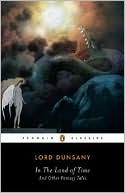
In the Land of Time: And Other Fantasy Tales by Lord Dunsany

This collection isn't perfect: it's too much for one book, and not every piece is equally strong. I do not recommend reading the book cover to cover! But as a survey of the many phases of Dunsany's work, it's very impressive. Dunsany's work is all over the map. I'm very interested in pre-Tolkien fantasy, so this collection was perfect for me.

Part I, the Pegana tales are world-building stories and focus firstly on a group of Olympus-like Gods. Old-fashioned prose influenced by the Bible and Greco-Roman mythology. Favorites: Legend of the Dawn, In the Land of Time, Sardinac, and Babbulkind, a reworking of the Tower of Babel story. These stories work better if you read The Gods of Pegana first.

Part II, Tales of Wonder, include a variety of more traditional fantasy stories. The Sword of Welleran is a stand-out. (However, this section included my least favorite in the collection: Idle Days, Go-By Street, and Perdondaris. Yawn.)

Part III includes mostly short prose poems. I like the first, Where the Tides Ebb and Flow. Many of these pieces try to imagine a future after mankind's demise.

Part IV is probably my favorite period. Dunsany starts taking fantasy ideas in new directions. I recommend every piece. The Wonderful Window is classic. Some of these pieces reminded me of Walter Mitty--The Coronation of Mr. Thomas Shap, for example. Mallington Moor is strong and Bureau d'Echange is very clever. Exiles Club has a nice twist.

Part V rounds up highlights from the author's Jorkens tales. (Club stories--Neil Gaiman has one in his collection Fragile Things.) I esp. enjoyed Our Distant Cousins, more of a SF piece about Mars, which reminded me of Poe's Hans Pfall. (Poe was first with everything.) Rillswood is quite funny.

Lastly, Part VI, Late Tales, a miscellany. Highlights: Policeman's Prophecy (another vision of the world after mankind), the hilarious "The Cut" (about a clever dog), Fairies (not what you expect), and Pirate of the Round Pond which, though somewhat predictable is good fun.

Joshi's selection is excellent, and his notes and introduction are well worth reading, depending on how much you enjoy Dunsany. I enjoyed him immensely and look forward to reading his novel The King of Elfland's Daughter


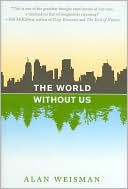
The World Without Us by Alan Weisman

And Weisman really means the world. With its ingeniously hypothetical approach, this book has a thrillingly global reach, considering such places as Poland, the African Rift, Pacific atolls, NYC, Chernobyl, the Gulf Coast, the Korean DMZ, New England, Central America and on and on. This was a slow read at times, but only because there was so much information that was new to me. There would often be 2 or 3 stunners in a single paragraph. Weisman kept messing with my sense of history - the extinction of North American megafauna, the history of the Amazon rainforest, the long and global history of mankind. This book has been a big readjustment. Friends asked, Is it a downer? Honestly, mostly no, though chapters 14-16 were the darkest for me, touching on threats to birds (personally I don't want to imagine a world without songbirds), and the challenge of nuclear waste, to name some standout targets.

I was probably most surprised by the threat which goes by a very silly name: nurdles. (Chapter 9) I guess The Graduate had it too right: the future is plastics. Did you know there's a continent-sized island of the stuff collecting in the Pacific? (In every ocean, actually.)

Still, there's hopefulness in the book--Earth is resilient, that's for certain--and the thrill of learning so much about nature provided me enough joy that I couldn't call the book depressing. Forests come back, species cling tenaciously to life. But society has some huge problems to face. Global warming is the tip of the iceberg.


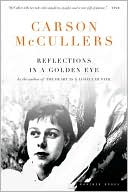
Reflections in a Golden Eye by Carson McCullers

As in The Heart is a Lonely Hunter, McCullers' gift for empathy enables her to realize a stunning array of characters' inner lives. This is Southern Gothic, as noted in the excellent afterword by Tennessee Williams, who deliciously mocks the uptight response common among the literary crowd of the day: "Why do they write about such dreadful things?" (It's also queer in a way that refuses to be pinned down to any one sensibility, i.e. gay, straight, bisexual, trans, male, female.) Although a murder is announced in the first paragraph, you can't quite be sure which of the six major characters committed the crime until the very end. Such is the thorough atmosphere of unease created by McCullers.

Labels: ,

Saturday, June 09, 2007

DeLillo's Methods, Falling Man

Some interesting bits about DeLillo in a recent Publishers Weekly article, "What Ever Happened to Old-Fashioned Editing?":
Novelist Don DeLillo composes sentences in a 48-point font—the size of a front-page New York Times headline—so he can really see the words. They don't scroll by in a speedy blur. Only then does he decide if the sentence is a keeper.
And:
I know the thrill Victor Hugo felt when his editor handed back a cleanly pruned manuscript. From a mess to Les Mis. Hugo bowed gratefully to his editor. “You have filleted a genie out of my smoke,” he said.
I'm still sort of scratching my head over his latest, the philosophical Falling Man. A "September 11th" book, yes, but not what I used to fear from 9/11 stories, the emotional exploitation, being dragged through events I don't want to relive. This book is actually quite subtle. Far from making you want to cry, it will only make you think, calmly. And I say "used to fear" because whereas last year I was studiously avoiding 9/11 stories (esp. at the cinema), I now feel strangely somehow cured or innoculated by the quiet reflection of this book. I'm over 9/11. Maybe I was a long time ago, but I didn't know it until now. I'm ready to face down the exploitive stories and films, the muckraking, whatever.

So much of the action of Falling Man is in the prose, DeLillo's artful way with sentences that are spare and possibly too understated--that comment about his working methods is revealing. It does feel he's trying to get the most out of the very least. DeLillo concerns himself with the effects of 9/11 on a group of New Yorkers, and the results are impossible to sum up. I feel like it's the kind of novel you'd have to summarize by quoting the entire thing. One interesting cultural connection he makes: the huge popularity of poker (playing or just watching others play) in the years following 9/11 and a kind of inner deadness or numbness experienced at the prospect of our own doom, a need to flee the material world and concern ourselves with the symbolic (money, chips, cards). With another character he explores (among other things) "still life" paintings ("still life" being a term that also evokes this novel's contemplative mood)--the characters begin to see the towers in what was previously just something beautiful to hang on the wall.

As he plays with the charge between sentences, so too does he play with the relationships between characters. Between a man who walks out of the towers as they are coming down and his ex-wife, the man and a fellow survivor, the man and his young son, the man and his former coworkers. Between a woman and her aging mother, her mother's European lover, her long-dead father, the group of patients she works with who are in the early stages of Alzheimer's. That theme of identity and memory with the Alzheimer's patients makes me realize that the themes her are organic and can't be easily reduced to simple ideas. For such a spare, elegant novel it's so sophisticated and complex. I wouldn't say I loved the novel, but I loved parts of it, and I respect it a great deal.

Reviews: Frank Rich in NY Times, Birkerts in the LA Times, the Voice, EW, Guardian, and on Fresh Air.

Labels:

Tuesday, June 05, 2007

Gregoire Bouillier's The Mystery Guest: An Account

Recently read The Mystery Guest: An Account by Gregoire Bouillier. Not bad, but I was a bit underwhelmed. (I'm betting it was Mark Sarvas who influenced a friend into recommending it to me.) Still, a couple passages made it into my virtual commonplace book:
“...and we never stop clinging to the idea that things could always be worse. When I was little, wasn’t that just what they used to tell me to quiet me down?” –p.66

And:
“...but wherever I looked all I saw was merchandise and nothing of any value except the value assigned to each thing in its turn by society, and nowhere I looked did I see any object that seemed to incarnate anything more than profit and gain, and in every direction lay all the commodities of the world expressing nothing so much as a degraded idea of The Gift, an idea contrary and, in a word, hostile to the idea of The Gift rightly understood, and the last thing I wanted was to arrive at that party bearing a gift that would shed its mystique the moment the colored paper and ribbon had been torn aside. And all at once I saw why our societies use gift wrap: not for the sake of surprise but rather to cover up the fact that The Gift is based on a lie, as we inevitably discover every time somebody gives us something, yes, and we open it and, after a microsecond when we expect the fulfillment of our deepest desire, disgust and sadness wash over us and we smile as fast as we can and say thank you, the better to bury our chagrin at never once in all our lives receiving something more than what we’d hoped for. And this evanescent joy, forever disappointed, remains incomprehensible to us.” – pp33-4

Labels:

Monday, May 21, 2007

Cormac McCarthy's The Road

I've never read a novel by Cormac McCarthy before, though I've long meant to, and the huge buildup of acclaim and hype eventually made me take the bait on his latest, The Road, even though I had the impression it would depress the hell out of me. Well, I would be lucky to be so depressed again very soon. It's a profoundly powerful story. In fact since I've read it I've been longing for an equally compelling story that would make me feel just as involved. I felt privileged just to be reading it.

It's a story of the end of humanity. The world seems to be in a state of severe nuclear winter, and what little life is left on the planet is in the process of dying. As depicted, that end could be in the recent past, the near future or the distant future, and I found it an extremely convincing vision. We don't get much information about what calamities have produced this world (just a few tantalizing details), and it doesn't really matter to these characters now. A man and his son are following a road and hoping to find...somewhere to survive? a community to join? What they hope for is actually a major question of the novel.

The style, especially early on, is breathtaking. The language has a Biblical power and beauty, and rather than using chapters for structure McCarthy shapes the entire narrative into short sections separated by white space, intense passages which are often just a paragraph and rarely exceed 2 pages but which each feel necessary. McCarthy's diction is a wonder. I often write down words I don't know when I encounter them in fiction though I don't always get around to looking them up, but here I recorded and looked up dozens of words which I not only didn't know but had never before seen. Simple yet unfamiliar words sometimes of the Anglo-Saxon variety, like gryke and woad, bollard and claggy; sometimes more Latinate or Greek in origin, like mastic and isocline. McCarthy names things which I never knew had a name, yet I didn't feel he was showing off. I simply felt he (or his narrator) cared enough to be precise. As if he were taking the time to savor the names of things before it's too late.

I'd describe the novel as literary speculative fiction. I wouldn't feel correct in labelling it as science fiction even if it does bear some comparison with the dystopian 1984. After all, the story focuses on the collapse of civilization, not some technologically superior totalitarian future. For a long time even after I finished it, I found myself wondering if the novel were meant to function as a warning about where society is headed or about threats to the environment. Those may be some of the author's purposes, but in its radical extremity of vision the novel forces us to take a new look at reality. In showing us how much it's possible to lose, the novel makes us appreciate what we have, especially those things we all tend to take for granted. One expects dystopias to make us aware of our problems, but instead they often primarily make us thankful for what we have. Which makes me wonder if McCarthy's purpose is really simply to give us a fresh perspective on life.

To that end, McCarthy excels in his sparing use details, giving you just enough information to make inferences about his world, to spur your curiosity until you're scouring every sentence for what you can glean between the lines. It effectively lifts the story off the page and into the reader's mind where it becomes an exceptionally vivid experience. It's masterful technique.

And in Bush-era America, in which whole nations have been labelled as Evil (versus others which are presumably Good), it's interesting to see McCarthy's young character ask, "Papa, are we still the good guys?" "Good guys" is such a core concept in our national narratives and though McCarthy illustrates the concept as a rudiment in a child's moral education, it's clear the idea still stands for something powerful for the man, too. One of the features of the novel that moved me most was the boy's sense of justice, despite the chaos and hardship. There are times he acts like a court-appointed defense attorney arguing with his father the harsh judge, advocating leniency and mercy towards some savage but desperate people. It gave me the idea that in McCarthy's view, for all his pessimism, our modern institutions of justice derive from something eternal in human nature. The love between father and son is a more obvious way in which The Road, as rough an experience as it is, is tempered with some hope.

Labels:

Monday, May 14, 2007

Heinrich von Kleist's The Marquise of O-

After reading about The Marquise of O- and Other Stories by Heinrich von Kleist in Francine Prose's excellent Reading Like a Writer, I decided to read the collection. (Even though it's much harder to find than the Penguin edition, I decided on the Martin Greenberg translation, which includes a preface by Thomas Mann, since that's what Prose quoted extensively and it's what hooked me. It was worth the effort. Greenberg's translation reads with wonderful clarity and directness.) Kleist, a German born in the late 18C, died in his mid-30s, and though he's known also for his drama and to some extent his poetry, I gather it's his fiction which is most often read these days, at least in English. This collection includes all of his fiction, and it represents a stunning achievement.

Prose celebrates Kleist for his opening sentences, which are indeed marvels and have apparently been admired for generations. I'm partial to the action packed opener of "The Earthquake in Chile":
In Santiago, the capital of the kingdom of Chile, at the very moment of the great earthquake of the year 1647 in which many thousands of lives were lost, a young Spaniard by the name of Jeronimo Rugera, who had been locked up on a criminal charge, was standing against a prison pillar, about to hang himself.
And, interestingly, having just searched the web for a copy of the sentence to copy and paste, I found various other translations which I didn't like as much. At any rate, though he often set his stories in the historical past, Kleist's fiction also feels strikingly modern. (Strange to think of him as Austen's contemporary.) Originally devoted to the ideals of the Enlightenment, Kleist apparently read Kant and had something of a meltdown and ended up a severe critic of Enlightenment philosophy. There's something a bit twisted to his sensibility, and in his introduction Greenberg points out that his world seems modern because it's unstable, shifting ("the world seemed flat but it turns out to be round").

I enjoyed every story, though I thought they varied in quality. "The Marquise of O-" has to be read to be believed. It's exceptional (and Prose devotes a lot of space to discussing it) yet I found the ending too cruel to accept. Symbolically, the resolution expresses a profound truth about human nature, but perhaps it's the modern feminist in me who can't accept it on the realistic terms which are the story's main strength up until that point. The novella "Michael Kohlhaas" is likewise an exceptional story, which I felt worked best in its first half, focused as it is on experiences that an ordinary person can more easily relate to. It's the story of a man whose attempt to seek justice is continually thwarted and decides to take the law into his own hands, becoming a vigilante. Interestingly, it's almost an animal rights story, since the initial injustice involves the mistreatment of two of his horses. The agonizingly escalating pitch of Kohlhaas' failed pursuit of justice put me in mind of Kafka, and it turns out Kafka was indeed a big fan. The story also influenced E.L. Doctorow's Ragtime. (If you check IMDb, you'll see Kleist has credits for the movie version as well as for films by Rohmer and Schlondorff.) The story ends with a rather subtle supernatural twist that reminds you he was writing in the Gothic era.

Speaking of the Gothic, "Beggerwoman of Locarno" is a short story that's quite simple yet effective, a bit slight and lacking the kinds of twist I expected but nonetheless interesting. Rightly or not, I couldn't help somewhat favorably comparing "The Engagement in Santo Domingo" to Melville's "Benito Cereno," a story which disappointed me. Both deal with insurrections by slaves--the former in Haiti, the latter at sea. "The Foundling," which includes something of a rivalry between a son and an adopted boy, made for a fascinating comparison with Wuthering Heights, which I read not long ago. I found myself wondering if this story was written partly in reaction to more sentimental tales of poor foundlings made good, because it's quite a dark tale.

"The Earthquake in Chile" is, I think, one of my two favorites in the collection. It's a pure success in narrative. Its consideration of life just after a great public calamity put me in mind of 9/11 and rang absolutely true despite having the shape of an O Henry story. "St. Cecilia" is an interesting story that deals with religion, intolerance and music in a unique combination. Mann praised the story for sending shivers down the spine and expressing the horror of music's power. The final story, "The Duel," is my other favorite. Like the title story, it deals with a woman who knows herself to be innocent but who appears very guilty, and the narrative employs some delicious twists. The chivalric era is skewered, and the idea of religious faith is put to a very memorable test.

Labels: ,

Monday, April 02, 2007

Art Out of Time: Unknown Comics Visonaries, 1900-1968

I've been absolutely absorbed in this recent anthology of relatively unknown, underappreciated comics geniuses from the golden era of comics. (I guess "golden era" depends on your definition. A lot of this is from the first four decades of the 20C.) I got this from a library, but I'm going to have to buy my own copy tonight. As I told a friend the other day, I'm renting a time machine and going back to the twenties to open up a shop selling magazines and newspapers where I can read all the great comics I want to.

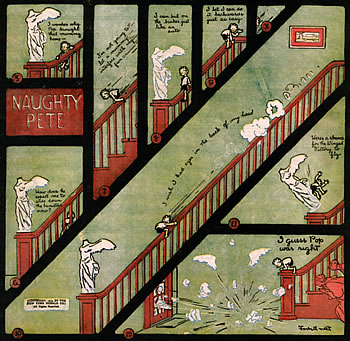
Editor Dan Nadel has done an amazing job selecting these works, and the short biographies he provides at the back are fascinating, with critical descriptions of each artist's work. He has an impressive knack for capturing visual art in words, and considering what a hodepodge of styles this collection represents, his summaries were especially helpful. Every artist here is worth reading, but of course we all have our own tastes, and I naturally preferred some to others. I really enjoyed Dick Briefer's funny Frankenstein, the full-page design of Harry J. Tuthill's work, Gustave Verbeek's "The Upside-Downs of Little Lady Lovekins and Old Man Muffaroo" (a strip you read first, normally, then turn upside down to continue, a wonderfully vertiginous experience that almost had me clutching the table), and the cool, strange surrealism and wordplay of George Carlson's "Jingle Jangle Tales." My absolute favorites were Garrett Price's "White Boy" adventure comics about the titles character's travels among native American lands (Price was also a New Yorker cartoonist), A.E. Hayward's sassy, jazzy "Somebody's Stenog," Jefferson Machamer's inventive thirties riot "Gags and Gals" (which apparently became a series of films), and Charles Forbell's "Naughty Pete," gorgeous full-page works with organically creative full-page designs.

And there's loads more: Raymond Crawford Ewer's Slim Jim, which seems to have influenced the look of Payne's "S'Matter Pop?" also included here; Quermann's "Hickory Hollow Folks" (the colors are gorgeous!), Milt Gross' "Nize Baby" and his jazzy, slapsticky "Pete the Pooch"; Cecil Johnson's "Elmo," Boody Rogers' "Sparky Watts," T.E. Powers (whose use of little personified "joys" and "glooms" fascinated me), and the excellent Terr'ble Thompson by the rather more famous Gene Deitch, who also did Captain Kangaroo's "Tom Terrific" (and whose son Kim wrote a graphic novel about comics called Boulevard of Broken Dreams which is going high onto my tbr list). Honestly, every one of these works is a gem. Which ones will stand out for you is a matter of taste, but I think it's safe to say there's something here for everyone, especially alternative and classic comics fans. Reading it has been one of the real highlights of the season for me. I'm going to buy my own copy immediately.

Also, I can't resist noting that many of the artists anthologized here have Chicago connections. Raymond Crawford Ewer worked for the Chicago Daily News. Garrett Price studied at the Art Institute of Chicago and worked at the Chicago Tribune. (Why don't they ever run golden era comics from their archives for fun?) Henry Hershfield studied at the Art Institute of Chicago and worked at the Chicago Daily News. Cecil Jensen studied at the Chicago Academy of Fine Arts (as did Boody Rogers) and also worked for the Chicago Daily News (as did T.E. Powers). Harry J. Tuthill was born here. Clearly, the city has a rich history of comics innovation it can be proud of.

In a Comics Reporter interview he recommends a Gerard Jones book, Men of Tomorrow, among other works and artists. Elsewhere, the Reporter profiles Art Out of Time, with some excellent examples from the book, but it's only a tiny sample.

Paul Gravett does a good job discussing the contents of the book and on his site you can see a few more tantalizing examples of comics from the collection, including one of my favorites, this episode of Naughty Pete.

Dan Nadel's blog.

A Comics Journal interview in which Nadel talks about where he found some of these comics and touches on complaints about the size of reproduction of some of the included work.

Nadel provides the introduction for a new collection of Deitch's Terr'ble Thompson, a strip that reminds me a bit of Rocky and Bullwinkle's wacky adventure sensibility. I hope Nadel continues to be involved in promoting these artists, because he has a great eye, sharp intellect, and great taste.

Labels:

Tuesday, March 20, 2007

Neil Gaiman's Fragile Things

Just finished Neil Gaiman's Fragile Things, the first book I've ever read by this major fantasy writer, and I very much enjoyed it. Based on this book, which to be fair is a minor work, just a collection of short fiction, I wouldn't call him a great writer, but he's consistently very good, and pop, and clever and likeable and surprising. He bridges American fantasy (including tv/film writing) and British fantasy in an interesting way, and he also combines a pulpy prose style with some literary/metafictional interests. In short, I'd definitely read more. In fact, this collection ends with an American Gods novella, and I'm already planning to check out that novel or perhaps Neverwhere sometime soon.

What struck me most about this collection is Gaiman's ingenuity as a storyteller. He sames to change "the rules" on you in every piece, something I suppose might be more impressive in fantasy, a genre in which figuring out "the rules" of each story is a key part of the experience. My favorites in the collection are: "A Study in Emerald" (of course, since I'm a Sherlock Holmes fan--it's so clever and satisfying I read it twice), "Other People" (a diamondlike short short with a timeless feel) which has a nifty companion called "The Mapmaker" in the introduction, and two poems, "Instructions," which (speaking of rules) lists all kinds of instructions useful if you ever find yourself in a fairy tale, and "Inventing Aladdin," a thoughtful piece about storytelling that made me appreciate the craft anew (and also wonder what it's like to be a Neil Gaiman or a Joss Whedon with everyone always counting on you to wow them yet ready to turn on you the moment you disappoint).

I also highly enjoyed about a dozen or so other stories: "Forbidden Brides of the Faceless Slaves in the Secret House of the Night of Dread Desire" (a sort of inside-out Poe story), "Bitter Grounds," "Keepsakes and Treasures" (a story like the final novella involving the thuggish Mr. Smith and Mr. Alice and which dealt with a legendary male beauty), "The Facts in the Case of the Departure of Miss Finch" (simple amusing), "Harlequin Valentine," "The Problem of Susan" (which taught me something I never knew about the Narnia stories, which I was never able to get through as a kid), "Fifteen Painted Cards from a Vampire Tarot" (highly inventive), "Feeders and Eaters" (gross, I never want to read that again!), "Diseasemaker's Croup," "Goliath" (a story inspired by The Matrix that might be better than at least the sequels, "How to Talk to Girls at Parties" (a bit Whedonesque, I thought), and the previously mentioned novella "Monarch at the Glenn.

Labels: ,

Saturday, December 30, 2006

Favorite Books I Read in 2006


In 2006 I had one of my strongest years of reading since college, spurred partly by my job which constantly kept me focused the latest books. The world of book blogs has also made it easier to stay more interested in literature. In the end, I could have ranked any of the top 8 in the top spot, depending on mood.

1. The Swimming Pool Library by Alan Hollinghurst
I'd stopped daring to hope that gay fiction could be this smart, this sexy and this well-written all at once. Hollinghurst has gotten big attention for his latest book, The Line of Beauty, and from what I understand it's a novel that the mainstream literary world can feel comfortable with. You can't say that about this book. I'm appalled there are so few published reviews of the book. I should have read this ages ago, but I'm glad I waited. This one just renewed me.

2. (tie) Jonathan Strange and Mr Norrell and The Ladies of Grace Adieu by Susanna Clarke
When it comes to novels, I'm fussy about my entertainment. I love British fantasy, but Tolkien was my first exposure and it spoiled me for life. If it isn't smart, with top-notch intelligence and prose, forget it. I've got better things to do. Susanna Clarke, however, gave me weeks of effortless enjoyment this year--her sense of humor (witty, slightly silly), her plotting, her twists on traditional fantasy tales, for me it all adds up to bliss. I enjoyed every page.

4. Black Swan Green by David Mitchell
Cloud Atlas wowed me and made me a believer in Mitchell. Black Swan Green seems so effortless. It's so memorable, so layered and evocative. As with Cloud its unique structure just sings, amplifying the story, but it's much less showy. So graceful. I can hardly wait to see what he does next. In the meantime, I plan to read the book he tipped his hat to, here, Le Grand Meulnes.

5. Ship Fever and Other Stories by Andrea Barrett
I adored Servants of the Map a few years ago and so I picked this up when I needed a solid book, and I hoped Barrett (like Mitchell) could be counted on. It was excellent, one to be savored. I love the way Barrett has carved out this niche for herself, the way she covers this beat (scientists and their inner lives) so thoroughly and with such depth and care. So exciting. I'm saving her novel Voyage of the Narwhal for another rainy day when I desperately need a strong work of fiction.

6. The Corrections by Jonathan Franzen
So consistently good--so smart and entertaining and insightful, just excellent satire. I felt very much implicated. Each of the main stories worked for me. The Complete Review goes a little too far but makes an excellent point: "This is what fiction should be like: solid, approachable, well-written, etc. But because so little of contemporary American fiction is The Corrections can be seen as a shining example of what fiction can be, rather than a good but relatively unremarkable example thereof." Imagine a year which can produce an American novel of this calibre every month.

7. Ficciones by Jorge Luis Borges
Presenting a radically different model of short story than the character-driven one I'm used to, this collection inspired me. Sometimes these slender little creations took more work to read than I expected, but they also truly inspired me. Definitely something for the literature lover only.

8. Suite Francaise by Irene Nemirovsky
One of the major literary events of the year was the U.S. publication of Nemirovsky's World War II era manuscript. Since she was killed during the Holocaust, I was worried her work would stay in the shadow

9. The Turning: Stories by Tim Winton
It was a bit of a thrill discovering this book: though better-known in the Commonwealth (twice Booker-nominated), he's all but unknown here, which made the book feel like a juicy secret. This collection of literary short stories is stunning for its earned insights into the lives of its Western Australian characters, and I enjoyed the way many of its stories are linked by related characters.

10. The Botany of Desire by Michael Pollan
An invigorating look at four plants that humans have a special relationship with: the chapter on tulips was a bit of a dud, but I learned so much from the chapters on the apple, cannabis and the potato. Stimulating.

Honorable Mentions:
Everyman by Philip Roth - Dark and depressing, economical and profound.

The Planets by Dava Sobel - I was prepared to deal with the downgrading of Pluto when the news came, thanks to Sobel's delightful book.

Measuring the World by Daniel Kehlmann - A European bestseller which it may be unfair to describe as Pynchonesque (certainly seems to merit comparison to Mason and Dixon in subject if not style or length) but more than fair to call a joy to read.

Wuthering Heights by Emily Bronte - A classic I'd never read--I was fascinated by the implicated narrator, the gothic/romantic setting and story, and the way in which the second generation of characters resolves the conflicts of the first.

Last Evenings on Earth by Roberto Bolano - Reminded me of Borges at times (he often mentions Spanish language writers and takes writing as a subject), but he definitely has a distinctive voice. A few of the stories did little for me, but some were knockouts. My favorites were the ones that least invited autobiographical readings: "Henri Simon Leprince" and "A Literary Adventure."

Arthur and George by Julian Barnes - Strong story and an excellent realization of Conan Doyle's realtionships and psychology.

Several short stories by Ambrose Bierce - In between books I read a bunch by Bierce (including "Chickamauga," "The Damned Thing," and "An Occurence at Owl Creek") that surprised me. They helped me bridge the gap between Poe and Crane.

Worst:
Winkie by Clifford Chase
Magic for Beginners: Stories by Kelly Link
Starred reviews all around for Winkie which had a few good ideas but was terribly executed. Crap, really. Link has been hyped to the skies but her fantasy stories explore weirdness for the sake of weirdness and are, to my taste, shapeless, pointless and witless.

Top 5 Graphic Novels

I read so many strong graphic novels this year, I had to make a separate list.

1. Fun Home: A Family Tragicomic by Alison Bechdel
I loved this book so much I had to create this separate list to give it the top ranking it deserves.

2. The Best of the Spirit by Will Eisner
Amazingly inventive storytelling.

3. The Watchmen by Alan Moore
The only truly great book I've read by Moore so far.

4. The Quitter by Harvey Pekar, art by Dean Haspeil
Excellent coming-of-age story, in some ways a good companion to Roth's Everyman.

5. Mom's Cancer by Brian Fies
A webcomic so good it became a book.

Honorable Mentions: Black Hole by Charles Burns, Flight Vol. 1 (Various), La Perdida by Jessica Abel, Banana Sunday by Root Nibot and Colleen Coover

Labels: ,

Wednesday, July 20, 2005

Reviews of some books I've read recently:

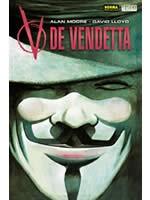
V for Vendetta by Alan Moore and David Lloyd
I can see why a friend urged me to read this Orwellian graphic novel by the celebrated Alan Moore. Not only is it being made into a film, but the story involves the persecution of gays (and other scapegoat minorities) in a new fascist society in the near future. Written in the early 80s, the story is set in the late 90s. V, the hero, is an anarchist Guy Fawkes figure (a terrorist!--from the fascist point of view), fighting to return the possibility of freedom to society. It really couldn't be much more relevant than it is today, with all our talk of giving up civil liberties in exchange for security from terrorism. One of the most sophisticated graphic novels I've read. I wasn't really emotionally involved in the story, but I'll say this for it, at least: I thought it was more effective than Thomas Disch's Camp Concentration, one of its influences. And I'd be impressed to see a teen reading something like this. (Speaking of influences, an essay at the back of the book includes a fascinating list: "Orwell. Huxley. Thomas Disch. Judge Dredd. Harlan Ellison's 'Repent Harlequin! Said the Ticktockman.' 'Catman' and 'Prowler in the City at the Edge of the World' by the same author. Vincent Price's Dr. Phibes and Theatre of Blood. David Bowie. The Shadow. Nightraven. Batman. Farenheit 451. The writings of the New Worlds school of science fiction. Max Ernst's painting 'Europe After the Rains.' Thomas Pynchon. The atmosphere of British Second World War films. The Prisoner. Robin Hood. Dick Turpin...")


Freakonomics by Steven Levitt and Stphen J. Dubner
A zippy but ultimately slight little book filled with interesting tidbits. It's padded (especially the unnecessary introduction) and revoltingly self-congratulatory (the two authors take turns praising each other), but it handles some extremely provacative material with great sensitivity and a refreshing sense of humor. The best sections deal with cheating, the KKK, crack pushers, a debatable crime-abortion link, and parenting, and these sections are worth skimming. I was especially fascinated by the section on Stetson Kennedy and the Klan. They tell a story about how he infiltrated the Klan, learned their secret passwords, and then reported them to the writers of the Superman radio show, which included them in a storyline. When kids across the nation started incorporating the passwords and behavior into their play, it made fools of the members, a big factor that led to their organization's decline. I also learned that the infamous film Birth of a Nation was not just racist, but actually helped spark a huge revival of the organization. Shameful. Despite such interesting sections, ultimately, however, the book lacks depth, as in its brief discussions of homelessness, the origins of Listerine, recent controversy over WMDs in Iraq, and rape statistics, all of which tease the reader without offering anything of substance. As another example of the book's silly, strained and self-congratulatory approach, the writers often lecture on the importance of thinking outside the box. "If you ask the right questions," they write, like, "What do Schoolteachers have in common with Sumo Wrestlers?," you'll achieve fresh new insights. Of course, Levitt never asked himself that ridiculous question. It's obviously a crude rhetorical attempt on the writer's part to connect a hodgepodge of material. Dubner should have assumed a more traditionally modest role in this effort, in which he's more than amanuensis but hardly a co-author. I wanted to gag when they kept excerpting Dubner's original adoring N.Y. Times profile of Levitt as a preface to every chapter. (More padding! More mutual admiration!) A thought-provoking but extremely overrated runaway bestseller, I hope this book is not rewarded with awards.

Empire Falls by Richard Russo
I had two close friends urge me to read this book, telling me it was great, plus it won Russo a Pulitzer prize, so perhaps it was recommended a little too highly. It's certainly very good, and for such a long novel it's quite zippy. The novel feels relevant and deeply lived in, with top notch characterization (although Russo, like many men, has a bit of a problem with women). On the other hand, I couldn't help feeling that the novel betrays a bit of condescension (surely unintended) towards its small town characters. I found its folksiness too cutesy at times. Although tragic things happen, it's the kind of story where balance somehow gets restored in the end. No one's dreams come true, and in some cases good characters move backwards, but they survive. I can appreciate the motivation to make artwork of the ordinary, to play a fanfare for the common man, and I'll admit that I was knocked out by the final chapter of Part One, one of the greatest shorts I've ever read. Russo's prose is always interesting, expertly striking a tone that's neither weighty nor trivial. There were two writers I kept thinking of while reading him, Dickens and Anne Tyler, both of whom, I think, reach greater heights at their best.

The League of Extraordinary Gentlemen V.2 by Alan Moore and Kevin O'Neill
The further (but not final, as I first thought) adventures of the Victorian league of superheroes. Good fluffy fun, as this time around they battle the aliens from Wells's War of the Worlds (now that's timely, isn't it?). I read it as a simple comic book, but some amazing fan's online annotations show how deep the allusions go, panel by panel. They really helped with the opening sequence set on Mars but including some human characters, the significance of which originally eluded me. That's really what the game is here, not so much the storytelling as the allusions to Victorian era storytelling, so be warned.

Song: "Harlem Shuffle" by Bob & Earl - iTunes

Labels:

Sunday, December 05, 2004

A review of The Plot Against America by Philip Roth


"They live in a dream. We live in a nightmare."(p.76)

Those words are said by a character in Philip Roth's new novel, The Plot Against America, to describe what it's like for Jews living under an anti-Semitic presidency (Lindbergh defeats FDR in 1940) during the time of Adolf Hitler in this gripping alternative history novel, one of the most suspenseful page-turners I've read in ages. Actually, for me there were at least two big questions driving the suspense: 1) Are the characters who suspect an anti-Semitic plot to collaborate with the Nazis right, or are they merely being paranoid, their lack of trust being the source of the problems? and 2) given that the chapter titles indicate that the story starts in 1940 and ends in 1942, well before the next presidential election, how would Roth wrap up the plot? Could Roth resolve his story in a satisfactory way?

So as not to spoil, I won't answer the first question, but as for the second, I was thrilled to learn that the answer is an unequivocal Yes! The way Roth resolves the plot is nothing short of brilliant, taking the real pieces of history and sewing them together in an entirely different, revelatory way. The grand narrative makes you wonder if such a turn of events is simply preposterous or whether just possible it could have happened. In other words, it challenges what we take for granted, and that's just what I valued most in this story, that it really helped me see the potential of the alternative history genre as a new way of looking at history (a lesson I'm learning again, having read The Man in the High Castle, an excellent book by P.K. Dick). The point is, history normally feels like concrete, something settles that we take for granted. Alternative history forces us to realize that history is actually just a matter of the way the pieces, thrown up in the air, happened to come down and arrange themselves. The dice might have rolled so many other ways.

In the novel, the narrator, a stamp-collecting kid named Philip Roth (Roth has used his own name for characters in several books) has a nightmare in which a series of stamps commemorating the majestic American landscape transforms through the addition of the Nazi swastika. This change, emphasized in the book's cover art, is symbolic of the way alternate histories are always so close to us, of how close our America is (was) to becoming another. Young Philip's dream is, in a sense, an essential reduction of the novel itself. (This reminds me of how, in Dick's book, the character Tagomi reaches insight after meditating on an object of jewelry and envisions an alternative version of his world that shakes him up. In both books there is a key emphasis on the connection between various versions of reality.)

This idea, in turn, helps us to see our present in a new light. We come to understand, to appreciate anew the fact that, despite our sense of routine and order, the events of history are in flux at the present and that we are--all of us--agents of history. We are woken up to the fact that we have a role to play now, an influence. That's why Roth gives us not presidents as characters, but ordinary people.

"Because what's history?" he asked rhetorically when he was in his expansive dinnertime instructional mode. "History is everything that happens everywhere. Even here in Newark. Even here on Summit Avenue. Even what happens in this house to an ordinary man--that'll be history too someday." (p.180)

"And as Lindbergh's election couldn't have made clearer to me, the unfolding of the unforeseen was everything. Turned wrong way round, the relentless unforeseen was what we schoolchildren studied as 'History,' harmless history, where everything unexpected in its own time is chronicled on the page as inevitable. The terror of the unforeseen is what the science of history hides, turning a disaster into an epic." (p.113-4)

This brings me to the next question, one that nagged me all throughout the book. Does the story speak to our historical moment? Is the story anti-Bush? (Is it, therefore, dated?) Having finished, I happily conclude that it's more complicated than a simple Yes or No could answer.

The book brings to mind many comparisons to our time. The 2000 election's weird popular/electoral schism, read through the prism of this book especially, looks like a moment in which history jumped the tracks and took a detour it wasn't supposed to take. Combined with the anxieties of the terrorism of 2001, our moment feels particularly out of joint. In Roth's book, FDR, who we know to have won four elections, loses in 1940 because of a chain of events starting with a showy stunt pulled by Charles Lindbergh. It's the kind of flashy moment that throws enough sparkle to confuse onlookers and make us wonder if it really could have been enough to change history. It's an exquisitely chosen scenario, plausible enough to sustain a serious reading of the story.

Aside from this big, rather loose parallel to our time, Roth very subtly weaves in some minor notes of comparison to our own time, occasionally revealing a sense of humor that wonderfully balances the growing note of terror and paranoia in the book. Some of Lindbergh's media-friendly stunts reminded me of George W. Bush's infamous "Mission Accomplished" Top Gun imitation, in which he flew onto a destroyer geared up like G.I. Joe. When we learn that Homestead 42, a piece of legislation that seems to have the worst intentions (much like the controversial Patriot Act today) was planned from the beginning of the presidential term, it reminded me of the outrage when many of us learned that the Iraq war was planned at the beginning of Bush's term but trotted out and sold as a spontaneous and necessary response to 9/11 (p.229). Also, on p. 243 we learn that there are rumors that Eleanor is considering running for office, the description almost perfectly doubling for Hillary Clinton ("still a popular figure whose blend of outspokenness and aristocratic reserve had gained her an enormous following among the party's liberal constituency as well as numerous mocking enemies in the right-wing press"). As another example, making a major character out of Walter Winchell put me in mind of similar media figures today, such as Michael Moore, Ann Coulter, etc. (Then there's also a hilarious dig at the New York Times, p.240-1, where Roth beautifully parodies the paper's compromise politics, a swipe that is every bit as relevant today as ever.)

But it's the way the book captures the tone of a divided nation that really nails what life has been like in the USA recently. Shortly after a scene in which the children receive a civics lecture from a projectionist, a newsreel audience is divided in its response: "a good half of the movie audience booed and hissed while the rest, including my father, clapped as loudly as they could." It reminds me of half a dozen moments I've seen or heard about, from the reaction to Moore's infamous Oscar acceptance speech to audience reactions at rock shows in Chicago. Roth portrays an America paralyzed because it's been divided, or hypnotized, or fooled, and once again his fictional America feels like a bull's-eye assessment of today's real America.

The overall tone of the novel, one of increasing anxiety and paranoia, strikes me as particularly important in the way it captures today's mood and reflects it back to us. For most of the course of the story, I had no idea which fears were justified, those of Philip's parents, who seem wise and experienced, or their critics. Of course, one tends to identify with the narrator, and this one sides with his parents, but despite author's, characters' and (most?) readers' instincts settling into agreement, the kinds of anxieties I had about "truths" in the novel mirrored the kinds of anxieties I have about truths while reading the news these days. (It feels like Roth "gets it," from a contemporary liberal's point of view, but I wonder if this "feeling" comes from me. When I read 1984, I felt agreement with Orwell, but Loui Menand argued in a brilliant essay not long ago that people of all political persuasions read Orwell and feel they agree. Is it the same with Roth's book?)

Roth's story is about Jews being targeted by the president, in a way that is rarely direct or overt, usually accompanied by public expressions of concern. (We're not trying to hurt you, only help you!) It reminded me of the way gays are targeted for political attack and exploited as scapegoats in today's politics while, all along, those doing the scapegoating deny any ill will towards gays. The insightful portrayal of Jews and "ghettos," their relationship to their communities for cultural sustenance and political protection, and how those needs can come into conflict with the Anglo-American majority, with their need to be Americans and to forge connections with the greater society often put me in mind of those issues for gays (and would no doubt be evocative for African Americans, as well as various other ethnic and religious minorities). Some of the characters openly criticize the heroes of the book for the way that their tribal loyalties undermine their own potential and opportunities in the wider society, and though these characters prove to be wrong about so much in the story, there's a bit of evidence that the narrator in his mature years (from which point this story is narrated) has gleaned some wisdom from their concerns (for example, p.337. "the wall of the ghetto (which had protected no one, certaily not from fear and the pathologies of exclusion)").

Roth demonstrates the value of family and ethnic/tribal identity as well as an understanding of the threats to that identity posed by assimilationism. Perhaps the most subtly nightmarish scenario in the book, in a plotline that involves Philip's older brother, is the program that sends Jewish children away from their families for extended periods of time, exploiting the family unit's weaknesses in order to sew discord and inner conflict. But it seems Roth's greatest venom is for the traitor Rabbi Bengelsdorf, who "koshers" Lindebergh for the electorate, thereby making him electable. (Such figures are common enough in today's politics--Clarence Thomas and Condi Rice come to mind.) The narrator's aunt, a former leftist unionist and activist, trades her lonely bachelorette life (and, seemingly, her ideals) to marry the rabbi, and she seems almost drunk with power and dizzy with access.

Family and community are far from idealized here. There's plenty of family conflict, climaxing with the confrontation between the narrator's father and his cousin Alvin, related in highly charged and memorable language that fills 6 pages:

"the two of them not so much fistfighting, not so much wrestling as caroming, with a terrible bony thwack colliding, rearing back and charging in like men with antlers branching from their brows, fantastical, cross-species creatures sprung from mythology into our living room and pulping each other's flesh with their massive, snaggletoothed horns"

That passage also, incidentally, illustrates Roth's consistent evocation of the male body and male sexuality, as when young Philip sees Alvin masturbate but doesn't understand the action, or when he notices the changes in his older brother's body after he returns from a summer of working on a farm. Roth shares this major theme/interest with John Updike, though Roth's writing has a completely different flavor.

In terms of literary quality, the book is clearly superior, and though it fully engaged my political understanding, it never boiled down to simple didacticism. It captures the full complexity of American politics. Politics and history aside, the story is a wonderful piece about the coming of age of a boy and his struggle to deal with adult fears, with injury of body--especially, memorably, Alvin's partially amputated leg; and with death, expressed in his imagination of ghosts, the basement as afterlife, and, for example, in the panic that overtakes him when he is locked inside a coffin-like bathroom. Philip's relationships with his brother, then his cousin Alvin, and then, most disturbingly, his neighbor and doppleganger Seldon (with their exchanged clothes) play out in an intriguing arc from failed hero worship to failed pest avoidance.

After a sedate first chapter, I found that Roth's gift for character sketches, like that of Steinheim, is excellent. His rhetorical style, with the exception of an annoying habit of inserting long lenths of material set off by dashes in the middle of a sentence, is graceful, clean and muscular. Initially I feared the book was being overhyped compared to other alternative histories merely because a big name of the literary world had written one (I'm always alert to possible snobbery towards the SF/Fantasy genres), but the book clearly rests on its own merits. I'm eager now to read more by Philip Roth, especially since his literary gifts and intellectual gifts seem equally dazzling.

*


I has so much to say about Roth's new book that it's been holding up the blogging. A couple final tidbits:

  • First, a stranger in a restaurant noticed me reading the new book, and it turned out he was a huge Roth fan (though he hadn't yet read the new book). Since this is the first Roth novel I've read, I asked him his favorites, expecting to hear American Pastoral or The Human Stain. Instead, he said Sabbath's Theater and Operation Shylock were his favorites and that, at least for laughs, Portnoy's Complaint must be read. (I replied that I'd certainly meant to read it for ages.) I always enjoy hearing the opinions of honest-to-God readers, supposedly a dying breed if you believe the streams of articles you read in the media.

  • A friend attended a reading recently by Roddy Doyle, at which time in response to some question or other, he apparently remarked that The Plot Against America is one of the best novels of the year and that it raised his blood pressure. He had to keep reminding himself...this didn't happen, this didn't happen. Since I think Doyle's Paddy Clarke Ha Ha Ha is a work of genius, I had to mention it.


Labels:

Wednesday, September 08, 2004

Women as Superheroes


"Wonder Woman is certainly an icon, an inspiration, and a role model--but not necessarily someone with whom you'd want to sit down for a meal. She seems pleasant but not really all that interesting.

Buffy would be fun to have dinner with."


Came across a new book called Superman on the Couch: What Superheroes Really Tell Us about Ourselves and Our Society, by Danny Fingeroth. I read the chapter, "Amazon Grace: Wonder Woman, Xena, and Buffy." The author talks about the evolution of women superheroes, with emphasis on their historical rarity, and uses the differences between WW and Buffy to measure the progress we as a society have made. He's optimistic, but his arguments are fairly plausible. I think we have come a long way, at least some of us. He mentions the phenomenon of men who can enjoy the character Buffy and identify with her, despite the fact that she's a woman. (Of course, women have been able to identify with male characters forever.) Harry Potter, Buffy the Vampire Slayer, Peter Parker--we can all relate to the pangs of adolescence and early adulthood. Interestingly, Fingeroth cites Phoenix (formerly Marvel Girl, aka Jean Gray) as one of the major female superheroes. Do you know that X-Men story? If the ending of the movie X2 is any indication, the sequel will be all about that character. Fingeroth argues that in the past, powerful women characters weren't trusted and had to be seen as evil (the powerful Phoenix quickly became "Dark Phoenix"), but I wonder. When you have so few major characters to analyze, is it fair to claim trends? The Phoenix story is about the corrupting influence of absolute power, a timeless theme. And can guys relate to Buffy because times have changed or because she's such a well-written, compelling character? Probably both. I'd like to think men are getting cooler about women heroes. (I don't think you can chalk up the failure of Catwoman to male bias, at least not completely. It was stamped "turkey" on arrival.)

On a related topic, I'm fascinated by the whole issue of superheroes managing their secret identities and their lovers at the same time. Apparently there are now iterations of the Superman and Spiderman comics where the heroes are married (to Lois and Mary Jane, respectively), but there are concurrently runs of the series where the heroes are younger, sans wives. Readers get both. I was pleasantly suprised by the ending of Spiderman 2--I didn't realize that in the comics, Peter "came out" to Mary Jane ages ago.

I learned some interesting tidbits from Superman on the Couch. Aside from a list of women superheroes I'd never heard of (Mary Marvel is supposed to be one of the more famous?), I had no idea that Supergirl wasn't created until after there'd already been: superboy, a super horse, a super dog and a super monkey! I also learned some fascinating things about the creator of Wonder Woman, William Moulton Marston, a lawyer/psychologist who invented the lie detector. Apparently the man had two children with a wife, two children with an assistant who lived with them, they all got along well enough, and after he died, the two women brought up the four kids. Wow! That aside, Fingeroth tends to dismiss Wonder Woman as a character who may have been iconic but who has always been a bit antiseptic, one that had a "good-for-you" quality built in. With the release of the new DVDs of the first season of the television show, I'd like to look again at the show (esp. the early "origins" episodes) which I liked very much as a tyke.

Browsing the rest of the book, which is uneven, it struck me that Fingeroth was onto a good idea, writing about superheroes. Along with that wave of books looking at various pop culture phenomena and philosophy or religion (a few examples), this book is part of a popular wave of interest in critical thinking. Considering the audience superhero movies and tv shows and comics reach, it's encouraging to see some good solid works like this getting people thinking a bit. I'd like to see more of this kind of work to balance all the academic litcrit that comes pouring off the presses (maybe I should say "trickling off the presses" since the runs must be small) and which is dry, unimaginatively political, jargon-filled and, in short, alienating.

Speaking of superheroes and comics, the first collection of The Escapist (inspired by Michael Chabon's novel, The Adventures of Kavalier and Clay) was, to my surprise, delightful. Basically, it's a set of short stories which put the characters through a bunch of clever different scenarios, eras, and styles, the writers fully taking advantage of the freedom they have to enjoy this fictional superhero. The collection includes a fun story involving librarian-by-day, superwoman-by-night Luna Moth. I'm excited about the Daredevil spinoff featuring Jennifer Garner as Elektra, a character with, apparently, quite a history in comics. And if you haven't seen it, I recommend the dark but funny comic book movie, Hellboy, newly out on DVD. Daniel Clowes, as one might expect, has a strange take on the superhero in the latest issue (#23) of his Eightball comic book, and it's well worth checking out. (Anything by the author of Ghost World is worth reading. Can't wait for the new movie, Art School Confidential!)

Also, Marjane Satrapis' fascinating (if rather mediocrely drawn) autobiographical story continues with Persepolis 2. And I've seen some interesting write-ups of the intriguingly titled, Trucker Fags in Denial. Hmm.

Labels:

Sunday, July 11, 2004

A Review of Franny and Zooey by J.D. Salinger


Franny and ZooeyExtra-long post today--I beg your indulgence. I recently finished reading J.D. Salinger's Franny and Zooey, which was the last of his books I hadn't read. (I also tracked down a lovely and sad uncollected story called "A Girl I Knew" from The Best American Short Stories of 1949, well worth reading.) After reading it, I went back to skim through the rest of his books, especially Nine Stories and Raise High the Roofbeam, Carpenters & Seymour: an Introduction, trying to tie together some themes and ideas in his work, especially in the Glass family stories. Every one of these books spoke to me deeply, and I began to wonder what about them appealed to me. (Warning: mild spoilers ahead.)

In Salinger's work, the figures who stand out most prominently are characters in crisis. On the one hand are the characters who die: Seymour Glass commits suicide (an event that looms like a dark sky over several subsequent Glass family stories), and Teddy foretells his death in circumstances that border mysteriously between the chance of accident and the will of suicide. These two deaths bookend Nine Stories, marking the climaxes of the first and final stories in the collection. On the other hand are the characters who experience dramatic breakdowns but who seem to turn a hopeful corner at the end of their stories, finding something they need to deal with their spiritual dilemmas. There's Holden Caulfield, of course, in The Catcher in the Rye, and Franny in Franny and Zooey. In the latter book, the emphasis is on the impact that the two eldest Glass children (Seymour and Buddy) had on the two youngest (Zooey and Franny) by exposing them at a young age to Eastern religious ideas and by encouraging spiritual values over the "normal" values of their peers.

"All I know is I'm losing my mind," Franny said. "I'm just sick of ego, ego, ego. My own and everybody else's. I'm sick of everybody that wants to get somewhere, do something distinguished and all, be somebody interesting. It's disgusting--it is, it is. I don't care what anybody says."

When I read Franny's statement, I was struck by how much it reminded me of Holden Caulfield's idealism. I felt a strong sense of agreement with what she says and remembered how deeply I sympathized with Holden's values when I read Catcher as a teen. Ten years into my career I'm surprised how much I still agree. Obviously we have to have an ego--and ambitions--to thrive in our culture, and I think that's healthy, but I've also always been very suspicious of the need to achieve status for its own sake. Franny has practically stopped living because of her disillusionment, so, clearly, her life is not in a healthy state, but many of her rebellious, nonconformist ideas are right on target.

I was bowled over by another of her tirades:

"It was the worst of all in class, though," she said with decision. "That was the worst. What happened was, I got the idea in my head--and I could not get it out--that college was just one more dopey, inane place in the world dedicated to piling up treasure on earth and everything. I mean treasure is treasure, for heaven's sake. What's the difference whether the treasure is money, or property, or even culture, or even just plain knowledge? It all seemed like exactly the same thing to me, if you take off the wrapping--and it still does! Sometimes I think that knowledge--when it's knowledge for knowledge's sake, anyway--is the worst of all. The least excusable, certainly." Nervously, and without any real need whatever, Franny pushed back her hair with one hand. "I don't think it would have all got me quite so down if just once in a while--just once in a while--there was at least some polite little perfunctory implication that knowledge should lead to wisdom, and that if it doesn't, it's just a disgusting waste of time! But there never is! You never hear any hints dropped on a campus that wisdom is supposed to be the goal of knowledge. You hardly ever even hear the word 'wisdom' mentioned!

I was struck by this so strongly, not because it is necessarily true of all academia, but because in the last year or two I've started to feel like I was cut off from the deeper significance of things, that I was getting distracted by the constant flow of information, much of it trivial. I enjoy reading classics, but, reading them on my own, I often felt like I was missing some depth. On the other hand, reading in book groups wasn't helping me much either. You shoot to be done with the book by a deadline--the evening of discussion--and just when you should be beginning to digest the book, within an hour or two the group has declared itself finished, the next book chosen. (I know of a book group that meets weekly, which is a big time commitment, but the group does have the advantage of discussing a particular book more than once, letting ideas about the book evolve. If I start another book group in the future, I want to build in a way of ensuring ongoing discussion.) For the last year I've been trying to read more meaningfully. Reading Azar Nafisi's brilliant Reading Lolita in Tehran was a major event for me in this quest, because it gave me an inspirational example of people who had done incredibly thoughtful and engaged reading, and since reading it I feel like I'm starting to get back on track.

Another thing I love about Franny's wisdom rant, in which she criticizes accumulation of treasure, is that Salinger sets this dialogue in a family room that is crammed to overflowing with the family's acquired furniture. This juxtaposition seems to suggest two seemingly incompatible truths--that accumulation is natural, perhaps even inevitable, but also, as Franny seems to realize, that it can be a trap. Seeing the great new film Before Sunset recently, I was struck by the way it handled some similar material. Like Franny & Zooey, Before Sunset is comprised of a conversation between two people (in the book there are actually three two-person conversations), and much of that conversation is concerned with questioning the values of consumerism (and accumulation) and its effects on our environment and our souls. Salinger's work, I've read, was seen as a critique of the post-war American economy and culture. Fifty years later, that conversation is every bit as vital because those problems are worse than ever.

What makes Franny & Zooey so interesting is the way Salinger pits brilliant Franny in dialogue against her equally brilliant brother Zooey, a guy who is clearly on the brink of a breakdown himself (in the course of the few hours of the story he sweats through his clothes though he's done nothing more than talk--a typical Salinger touch) but who has worked through many of the same issues Franny has and sets out to attack them, sometimes cruelly, sometimes with tongue in cheek, but ultimately with real love for his sister and insight into their shared problems. It's ironic that he has his most effective conversation with her by phone (from another room in the same apartment). Coupled with the fact that he is preoccupied in the beginning of the story with a letter from his eldest (living) brother, a (Salinger-like) hermit writer who is otherwise almost unreachable, even by phone, it suggests that these brilliant, loving siblings, as close-knit a family as they are, communicate best from a distance. (My favorite example is the message scrawled in soap on a mirror from BooBoo to Seymour in "Raise High the Roofbeam, Carpenters," but the Glass stories are teeming with vital communications conducted by letter or intercepted in diaries.)

As I said earlier, eldest brother Seymour's death haunts the Glass family, coloring the entire conversation between Franny and Zooey. Looking at his suicide in "A Perfect Day for Bananafish" for clues, I was struck by how similar to and yet different it is from the death of the title character in "Teddy." In both stories there is the suggestion that the characters have achieved a kind of perfect enlightenment on Earth and that, therefore, their deaths are due. They are ripe for death. Just as an example, when Teddy, a boy genius who (like the Glass kids) has been tested by numerous adult experts, is asked by an awed educator, "What would you do if you could change the educational system?", Teddy replies:

"...I wouldn't even tell them [children] the grass is green. Colors are only names. I mean if you tell them the grass is green, it makes them start expecting the grass to look a certain way--your way--instead of some other way that may be just as good, and maybe much better..." (195-6)

This reminds me of the subtle use of this color metaphor in a more offhanded way in "A Perfect Day for Bananafish," in which Seymour addresses a little girl who's taken a shine to him at a beach:

"That's a fine bathing suit you have on. If there's one thing I like, it's a blue bathing suit."

Sybil stared at him, then looked down at her protruding stomach. "This is a yellow," she said. "This is a yellow."

"It is? Come a little closer?"

Sybil took a step forward.

"You're absolutely right. What a fool I am."

Seymour subsequently takes the child into the water on a raft and tells her about fanciful Bananafish, which he encourages her to look for. When she claims to see one, he kisses her foot, returns her to shore, and subsequently returns to his room and swiftly kills himself. It is as if, having managed to get one child to see the world for just a moment in an imaginative way, he feels he has achieved his purpose in life and has nothing left to live for. Teddy, on the other hand, is depicted as some kind of kiddie zen master. He predicts the possibility of the death he dies a few minutes later, which causes the dark question of sucide to hang over the story, but I think the spirit of the story strongly suggests we should see his life as fulfilled and his death as an accident or a matter of fate. Both Teddy and Seymour are surrounded by family members who don't seem to understand them: Teddy's father and Seymour's mother-in-law are somewhat hostile; Teddy's mother and Seymour's wife are more sympathetic but still seem unequipped to understand them. The biggest difference, of course, is that where Teddy's death is probably accidental, Seymour's is self-inflicted and, more disappointingly, it is the kind of thing predicted by his mother-in-law, a disagreeable nag and worrywart. The story seems to be proving to us just how wrong she is--how silly she is!--until it takes its abrupt, disturbing turn, making us question our very instincts. As optimistic as I am in reading ambiguous endings, I can't see the end of the story simply as a vindication of Seymour's enlightenment.

It's that dark possibility of self-destruction that seems to haunt all of Salinger's characters in crisis. It's what makes Franny's turn towards recovery so powerful. It provides balance in Salinger's body of work, which is so perfect as it is that I can almost accept his desire not to publish anything else (even his previously published and uncollected stories). The concern with the proper education of children (and its effects) is at the core of Salinger's work. It's a beautiful (and, for a bestseller, unusual) theme that helps imbue these stories with an air of generous spirituality, their powerfully humanist quality.

*

Lastly, a couple miscellaneous notes:

In Zooey, the title character, an actor, is sitting in a tub perusing a melodramatic script entitled The Heart is an Autumn Wanderer, a clear spoof of Carson McCullers' The Heart is a Lonely Hunter, which caused a literary sensation not long before this was written. The McCullers book features a central character who is a deaf-mute, and it reminded me of "Raise High the Roof Beam, Carpenters," in which, after being pestered to the answers to some questions about Seymour Glass (and how he caused injury to a famous actress), Buddy finally pours out the truth to a deaf-mute old man, the only person left in the room at that point. In a strange way, like the relationships that the characters in Lonely Hunter have towards Singer, Buddy has a quasi-spiritual connection to this deaf-mute, though "Raise High..." inverts the deaf-mute character from a figure of tragedy to one of mostly comedy. In another possible reference to McCullers, in a letter to Z, Buddy (who is clearly modeled on Salinger himself) calls himself a "lifetime English major." A writer, he makes fun of college writing classes. Of 38 student stories, he says, "[t]hirty-seven of them will be about a shy, reclusive Pennsylvania Dutch lesbian who Wants To Write, told first-person by a lecherous hired hand. In dialect."

I already knew Wes Anderson's The Royal Tenenbaums was Salingeresque, but in re-reading the Glass stories, I noticed several striking similarities. Aside from the fact that the children are all eccentric geniuses who live in New York City, achieved a certain fame in their youth, and grow up to face psychogical/spiritual crises, they also share certain traits like smoking cigarettes. Zooey has a major scene where he is sitting in a bathtub and his mother comes in to talk; ditto Gwyneth Paltrow's character. Lastly, BooBoo Glass' married name, we learn in "Down at the Dinghy," is Tannenbaum (slightly different spelling). I don't know how much of this was conscious modelling (someone told me that Anderson got the name from friends), and I don't mean to suggest that the film (which I love) is a rip-off. I don't recall learning much of anything about the Glass family father in any of Salinger's stories, but Royal is the center of Anderson's film. Still, since Salinger is (thank goodness) dead-set against letting Hollywood adapt his work (although his short "Uncle Wiggily" was the basis for a film), I like the idea of a skilled film director doing the next best thing, writing unique stories that are influenced by J.D.

Also, a Glass family quiz and a handy list of Salinger's shorts, collected and uncollected.

Labels:

Thursday, June 03, 2004

Enchanted Lonely Hunters Club


Recently finished The Heart is a Lonely Hunter by Carson McCullers and loved it. I got interested in the book when I read an essay by Sarah Schulman in The Nation (way back in June of 2000, my god where does the time go?) and made a mental note to read her work. I tried twice to get my book group to read it, but they chose other books and I got sidelined. This is why I gave up the regular book group and now only attend à la carte, choosing groups around town who happen to be reading books I want to read, most of the time reading on my own again (and loving the freedom). When Oprah recently picked it, I thought I'd join in--it gave me an excuse to pick it up and a deadline. I was impressed with the online resources for the Oprah book club. I never went into the discussion forums (they're always disappointing in my experience), but the reading schedule with email reminders was helpful, and I liked the answers given in response to questions by their resident literary expert, Virginia Spencer Carr, a McCullers biographer. Not only did she treat the dopier questions with respect (the whole point of the Oprah club is to empower non-scholars to read the classics, after all), but when asked big, interpretative questions, rather than deflect with one of those "the meaning is what you make of it" answers you typically get from Lit. teachers, she gave actual opinions. How refreshing! (I was also fairly pleased with the publishing company's discussion questions, which were great for covering the basics.) On the other hand, I was very disappointed with the television side--did I miss a discussion episode? When I tuned in May 31, only half the show was devoted to books (the first half was lame celeb interview extras), and in place of discussion ordinary people participating, there was an interview with some celebs about the experience of being a deaf-mute (inspired by deaf-mute character Singer). An ok interview, but hardly a satisfying engagement of the novel.

The Heart is a Lonely Hunter is a stunning demonstration of a young novelist's inexplicable abilities to cross all social categories (race, sex, age, class) through sheer imagination. The setting is the 1930s South, and the story concerns itself mainly with 5 characters' attempts to make connections with other human beings. Come to think of it, it's a central irony of the book that the story beautifully expresses frustration in making human connections when the author displays a consistent mastery of empathy. In fact, I think that's why I was startled by the way the plot's events finally unfold--McCullers' narrative example seems to promise something intrinsically optimistic, whereas her story expresses pessimistic doubts (with, notably, some strong glimmers of hope). But that's also an excellent example of the balance of this artwork, which is excellent from its underlying structural elements through its surface detail, as in the wonderful coming-of-age story of young tomboy Mick. Her sequences are filled with observation about pre-adolescence, with its not yet articulated longings, and the chapter about her "prom" is quite a setpiece. I especially treasure the writing about Mick's love affair with music, the way it awakens deep passions in her and the way she creates an "inner room" in which to celebrate and protect these feelings--I strongly related. The first time she hears Beethoven is one of the finest passages I've ever read. I was struck by how sensitive McCullers always is to human emotion. If, as many people have pointed out, the novel is like a work of classical music (for example, part two as a fugue), this handling of characters and their emotions is the heart of the musical approach, treating the flow of emotions like melodic lines.

Re-reading Schulman's piece greatly helped me understand the queerness of the novel, and helped put it in the context of McCullers' career and body of work. Both Mick and Biff (in some ways the most hopeful characters of Lonely) are described in terms of crossing gender boundaries, their sexuality subtly problematized. Apparently when these subtextual queer themes became overt in the later work Reflections in a Golden Eye, critics chilled towards McCullers (and it became the McCullers novel most likely to be out of print over the years), but good ol' Tennessee Williams championed her work all along, which is something to be glad of, anyway.

Labels:

Friday, May 28, 2004

Picture of Samuel Delaney
So I've been going to a SF book group on and off for a couple years now, mostly when they read classics I've been wanting to read, and I've read a few on my own or with other groups. (I'm a shameless cherry-picker.) Really loved Ender's Game by Orson Scott Card, and The Man in the High Castle by Philip K. Dick (whose fans, I've read, are Dickheads!). I thought 1984 respectable (much more interesting after reading a great essay on the book by Louis Menand in the New Yorker), but that Fahrenheit 451 is valuable for a few ideas but stinks in terms of prose, character and plot (gee, that's quite a lot of stink, isn't it?). Heinlein's The Moon is a Harsh Mistress was better, and provacative, but many of its ideas were annoyingly libertarian. The Parable of the Sower by Octavia Butler was a complete and utter disappointment all around--just lefty apolcalyptic pessimism at its worst. How it can even be called SF is just beyond me. Sure, 1984 and Harsh Mistress are also primarily political/sociological in their concerns, but there's at least *some* science fiction elements to them (issues of technology, space colonization, etc.). Better to call it merely Dystopian fiction. I expect SF to play with ideas, even if it's at the expense of character, but Sower's ideas are just to exaggerate contemporary urban strife and suggest that if people band together they'll have more of a chance. Her views of how far and fast human nature can devolve is insulting, worse than zombie movies. Life is Hell, so follow me. I'll devise my own cult spirituality and be your leader. You know what? Fuck that.


The Left Hand of Darkness is the first book I've read by Ursula K. LeGuin, and for a book I didn't really enjoy reading much, I was amazed at how much I had to say about its ideas, concerns, themes. I was expecting it to be about gender much more than it actually was. Instead, the book's main theme was wholeness. Basic set-up: in the distant future, Terrans are part of a large alliance of humanoid-inhabited worlds and are reaching out to new worlds to join. Should be familiar to anyone who's seen any episodes of the original Star Trek. The aliens of this book are all "bisexual," which in this case means they all have male and female reproductive parts. Anyone can sire, anyone can give birth. I expected this to play out as a metaphor about gender here on Earth, but LeGuin treats the Gethenians as a distinct race, and it's their contrast with humans that sparks a lot of interesting ideas and thought. I read this with a gay men's book group, and some of the members really found the sexual material in the book to be provacative. I didn't. That was interesting to discuss. (Basically, I didn't find the Gethenians to be sexy, as depicted by LeGuin. She basically protrays them as aloof and fat.) The societies of the planet remind me of a Cold War-like situation between a society like Japan and one like the USSR. Lots and lots to discuss, but as I said, not the most enjoyable read. The protaganist spends most of his time cold, suffering and on the run. (By the way, I recently read a juicy review of her Earthsea fantasy books.)


Then recently I read Babel-17 by Samuel Delaney, an author I'd been meaning to read for some time. I was awe-struck. Though written in the 60s, the novel is far ahead of its time in dealing with many issues (like body modifcation like scars and tattoos but taken to a much more imaginative extreme) that are prevalent today. In some ways, this book represents one of my ideals of the novel: slim and packed with ideas. All the fat cut out. Similar to Neuromancer in this respect, but Delaney's a much better prose writer, able to incorporate poetry (the protaganist, Rydra Wong, is a poet of interstellar fame) and hard science ideas. Every chapter brings new treats. The book is like Christmas. By the time I was done I almost felt guilty--should "literature" be so enjoyable? There's a story mentioned in the novel, called Empire Star, and recent editions of Babel-17 include it as a flipside edition. Empire Star, novella length, is an even more aerodynamic story, a bit more wacky and psychadelic, but an intellectual puzzle set. Great fun. It's strange and complex, and I'm not sure it all ties up in the end, but it's admirably smart and clever. Wow, I look forward to reading more Delaney. I would definitely rank him up there with Dick as an exciting and innovative SF writer.

Labels:

Saturday, May 15, 2004

Lolita through the Looking Glass


Picture of Azar Nafisi

I recently finished Reading Lolita in Tehran by Azar Nafisi, a memoir in books that truly renewed my enthusiasm for literature. Before leaving Iran to teach literature in the U.S., Nafisi led an underground literature class made up of a hand-chosen group of some of the best women students from her years of teaching English literature in universities before restrictions on that teaching career led her to resign. The book's first section focuses on that group of extraordinarily bright and gifted students (I wish my English classes had been filled with such students), but the rest of the book explore other chapters of her life, such as what it was like teaching "decadent" Western literature during the Irianian revolution, or what life was like during the long, hard war between Iraq and Iran. I'm so impressed by the way she blends her life-story with her reading of great books (mainly, but not only, Nabokov, Fitzgerald, James and Austen), some of which I've read, some I haven't. She could have dwelt on the mass deaths--the statistics--but what I love is that, instead, she focuses on the cultural experience of life in Iran, evoking it using physical details as well as the metaphysical challenges.

I was lucky enough to get to see the Nafisi read in person while I was in the middle of this book. I was utterly smitten. She has a beautiful accent (not unlike Isabella Rossellini) and delivered a powerful message about freedom, literature and humanity. The large auditorium was full to capacity, and she answered questions until there were no more (a rare feat ). Many of the questioners had incredible backgrounds--a fellow Iranian woman who had also left the country and brought up the topic of atrocities; a sweet young first-generation Iranian-American man who thanked her for helping him understand his parents and heritage; a man who had lived through the Chinese Cultural Rev. and drew parallels between their experiences, etc. Nafisi (the picture above barely does justice to her beauty) was electrifying and seemed to be teeming with ideas--she could have spoken all night. If you can't get to see her read in person, check out her online Dialogue Project.

Reading this book has truly deepened my appreciation of Iranian films, such as Crimson Gold, the latest by Iranian director Jafar Panahi, who directed my favorite Iranian film, The Circle. Crimson Gold adds a completely different perspective on Iranian society from Panahi's other films, which featured women and children as protaganists. This film concerns a working class male war veteran who works as a pizza deliverer, yet all around the edges of the story you get glimpses of the problems that face women and other social groups. (Jonathan Rosenbaum helpfully contrasted the film with Taxi Driver--both deal with frustrated war vets who simmer with rage until finally exploding in an act of violence--though I don't think Crimson Gold is quite as powerful a film.) The sequence that interested me most has the main character arriving at an apartment building to make a delivery and finding himself in the midst of some kind of dragnet operation, where men of dubious authority (no uniforms) are arresting guests of a party as they trickle out in small numbers (their crime? unmarried people dancing!). This is where having read Nafisi's book comes in handy: she describes religious gangsters patrolling the streets in minibuses and the criminalization of such things as open socializing. She also helped me to understand the relationship between Iran and the West (esp. the U.S.) as portrated here: an intriguing character in the film is a rich son of Iranian-Americans who has returned to Iran because of a kind of identity crisis. Her book is also helping me understand the importance of the theme of reality versus unreality. In a totalitarian society, everything one does to obey or even rebel creates a nauseating sense of unreality, a crisis of reality. What is real? What would life be like without the oppression? These ar e constant questions that undermine one's sense of the real. (I think we all have an element of this experience living in civilized society, but it is more pronounced under these extreme conditions.)

Labels: ,