Monday, July 14, 2008

Shortlists, Retrospectives, Appreciations, and Bug Porn

Have you heard? Missing footage from the film classic Metropolis has been discovered. Cool!

"Give us back our shortlists" - in a nutshell, this columnist chides the current Frank O'Connor award jurors for skipping the shortlist stage and simply announcing the winner, Jhumpa Lahiri. I agree. I'm not a big Lahiri fan, but that's beside the point. I don't begrudge her winning (though does the only short story writer to top the bestseller list in ages really need this little award?), but I do think a shortlist should have been announced, and I don't want to see this become a trend. I'm the kind of reader who looks at shortlists and finds them useful in deciding what to read. The top 5 in any literary finals are generally strong, and there's usually something on any such list that I just needed a bit of encouragement to try. Somehow, I think the odds are much lower that a list of one will inspire me to read. OR. TO. BUY.

Two articles On the films of Hal Ashby: there's a retrospective of his work going on out West. Wow, that's a series I'd love to see. I'd never heard of The Landlord in particular, and it looks fantastic. The rest are on dvd, and I just may screen my own series at home if the series doesn't come to town.

I agree with NY Magazine: that was one delicious takedown in the Times a few weeks back. I usually resist reviews that are so nasty, but it just so happens that I recently picked up another book (Choke) by the target, erm, author in question, Chuck Palahniuk, hoping for an enjoyable if pulpy bit of subversiveness (in other words, exactly what the book's advertised to deliver) and found it so mediocre, so contrived and strained that I had to put it down, which I rarely do. So I was fairly cheering Lucy Ellman on, even though I still kind of wish Palahniuk well in his mission. Oh, man. She included Alice Sebold in her list of overrated hacks. Joy! I'm not the only one, hallelujah! This is one mean review to savor.

On his blog, continuing to clear out his drawers, Jonathan Rosenbaum posts an appreciation of Susan Sontag from 2005. (Hmm, small coincidence: Sontag also wrote the intro for the novella I just finished, Pedro Paramo.) So far, what I've found most interesting here is a glancing reference to the debates which went on in the 60s about whether film could be considered an art form: "What impressed me most in her writing was ... and the fact that all four articles treated film as part of art and thought without any sort of self-consciousness or special pleading—-an approach that seemed virtually unprecedented at the time." I came across references to this moment in film history a few times last year while reading coverage of the deaths of Bergman and Antonioni, but this time it registered more consciously, made me stop and wonder: how strange that film should ever have been discriminated against in this way. I've taken it for granted at least since I was a teenager that film was as valid an art form as literature or theater. Then it occurred to me that perhaps a similar debate has been going on in the last ten years towards comics/ "graphic novels," whatever we're calling them. Perhaps a symptom of these cultural growing pains has been the struggle to name the art form. (The title of JR's piece, btw, alludes to Goodbye, South, Goodbye, directed by Hou Hsiao-hsien, championed by Sontag.) [More Rosenbaum: on Marcel L'Herbier? Who? And on Tati's Trafic, coming soon from Criterion.]

"Three gay and lesbian fiction gems" by Michael Upchurch (who also recently wrote an enjoyable appreciation of Guy Maddin's latest). Enjoyed the McCartney, and I kind of want to read the Maguire.

Are movie critics out-of-touch elitists? And, besides, don't bad movies dominate at the box office, anyway? Apparently not.

The stupid newspapers may be chopping book coverage (right, because you can't make money selling books to the freaks who read newspapers in print), but NPR apparently understands what its audience wants. (I'm not really a big fan of Jessa Crispin, though, I must admit.) Hey, Chicago Tribune, take a lesson as you redesign your paper - don't cut your book coverage, expand it, improve it.

"The Fate of The Sentence: Is the Writing On the Wall?" Or is this a case of silly alarmism?

Looking for something good to read? Check out the Telegraph's "50 best ever summer holiday books" or the Guardian's travel-themed selection, "Friends for faraway places," featuring Dave Eggers on Chicago books, David Mitchell on Japanese books, etc.

"10 Ways to Become a Better Film Critic" - Who is Evan Derrick? This is brilliant.

A little Wikipedia observation. So I was looking up playwright Brian Friel a couple weeks ago and came across startling evidence of a battle among its contributors over the content. This is what it said in the subsection on the play "Molly Sweeney," capitalization exactly as it was:
Molly Sweeney (1993) enjoyed considerable success on the stage, but it attracted little critical interest, perhaps because of its superficial similarities to Faith Healer (1979), another play comprised of a series of monologues. This play is about a blind woman in Ballybeg who constructed for herself an independent life rich in friendships and sensual fulfillment and her ill-fated encounter with two men who destroy her life--Frank, the man she marries who becomes convinced that she can only be complete when her vision is restored, and Dr. Rice, a once-renowned eye surgeon who uses Molly to restore his career. Richard Pine has written in depth on the relationship of his play to Oliver Sacks' work and the controversy that forced Friel to recognize Sacks' work as an inspiration for the play. THIS IS COMPLETELY ERRONEOUS - I HAVE NOT WRITTEN ANYTHING ABOUT 'THE CONTROVERSY THAT FORCED FRIEL TO RECOGNIZE SACKS' WORK' - NOT LEAST BECAUSE I AM NOT AWARE OF ANY SUCH CONTROVERSY. WHO IS THE AUTHOR OF THIS ERRONEOUS STATEMENT?
And this is how it reads today:
Molly Sweeney (1993) enjoyed considerable success on the stage, but it attracted little critical interest, perhaps because of its superficial similarities to Faith Healer (1979), another play comprised of a series of monologues. This play is about a blind woman in Ballybeg who constructed for herself an independent life rich in friendships and sensual fulfillment and her ill-fated encounter with two men who destroy her life--Frank, the man she marries who becomes convinced that she can only be complete when her vision is restored, and Dr. Rice, a once-renowned eye surgeon who uses Molly to restore his career. In a note in the programme of the 1996 Broadway production Friel says that the story was inspired in part by Oliver Sacks's To See and Not See.
You hear about these things, but I'd never really come across such a good example before of how the site is constantly in flux. I read a good point the other day about how WP (the people's Encyclopedia) is not appropriate for citation, not because the information is bad or can't be trusted (that's the route the argument usually takes into heated territory) but simply because it probably won't be the same when you check back. That does kind of turn the whole exercise of citation into an absurdity, doesn't it? You may as well just write in the footnote of your paper, "Well, this is what someone on the internet said on such-and-such a date and time.)

I know it's made the rounds already, but if you haven't seen Isabella Rossellini's funny "Green Porno" series, you should take a peek. Isabella, you are a goddess.

Finally, the movie "Ben & Arthur" is currently at #8 on the imdb bottom 100, and you really have to watch the trailer to appreciate just what's gone wrong with gay independent filmmaking - or perhaps independent filmmaking in general. (Or wait: maybe it's an intentional satire, and it's actually wickedly brilliant and...and...)

Labels: , , , , ,

Sunday, November 11, 2007

Ansen, Bordwell, Rosenbaum, Haynes...and oh so much more

OK, done clearing out the files. These are mostly film/tv-related links (with a couple bookish tidbits):

You mean I'm not the only lunatic who keeps a notebook recording all the movies he watches? Critic David Ansen writes about his notebook and the lifelong love of movies it is a testament to. Cool!

Good list of promising film projects in the works (scroll down for the best ones).

Smart piece by david Bordwell on the use of framing in comedies. I was delighted to see he focused on Play Time and Shaun of the Dead, two very different films I love very much. His comments on a gag in Shaun gave me even more reason to laugh next time I see it.

IFC recently premiered Does Your Soul Have a Cold?, a documentary by Mike Mills (who directed Thumbsucker), which looks at the ramifications of exporting Western definitions of depression and its cures to Japan. Wishing I had cable right about now.

What's the deal with Etgar Keret? The Israeli writer has been getting great reviews for his short story collection, The Nimrod Flipout, and I noticed that he acted in a film that played at the recent Chicago International Film Festival, Jellyfish. He also wrote the story that is the basis for Wristcutters: A Love Story, an independent film that's been making the rounds with solids reviews so far.

FD fave and Orson Welles expert Jonathan Rosenbaum recently championed some footage from Welles' unfinished Don Quixote. Give the clip a minute to get to its payoff, which is pretty cool. And yes, that's the girl from The Bad Seed.

Todd Haynes's Safe, one of my favorite films, was featured at a recent environmental film festival. The director, out promoting his new crazy-looking Bob Dylan movie (can't wait), couldn't attend. So he sent this silly little short introduction. The better you know Haynes's career (including Superstar), the more you'll get a kick out of this.

A good article on the state of the Oscar races at this critical point in the movie season and, much more interesting to me, the announcement of the official nominees from the nations around the world for the foreign category. Which 5 will eventually be chosen? Based on what I know and have seen so far, count on France's Persepolis,
Israel's Beaufort, and Romania's 4 Months, 3 Weeks and 2 Days. Strong maybes: Germany's The Edge of Heaven and Spain's The Orphanage. I'm dying to see South Korea's Secret Sunshine, but it hasn't a chance. I also want to see Hungary's Taxidermia, but again, slim chances. I've seen Hong Kong's Exiled, Mexico's Silent Light, and Sweden's You, The Living, and I'd say Mexico and Sweden have a fair chance at a nomination. The real question is, what gems are buried in this list?

The 2007 World Fantasy Awards have been announced.

No one complains like Sarah Schulman. It's not always easy to be a fan of hers, but I think she makes some important points here. It's true that her latest (The Child) has gotten great reviews. I was appalled to learn how long it took for it to get published. I recently read Fritz Peters' Finistere, a masterpiece of gay literature that happens to be largely about a teen boy who becomes romantically, sexually involved with an adult. The book treated the subject appropriately, and I didn't bat an eye until I read the introduction in which it was pointed out that a story which was mainstream in the 50s would be actually meet much more resistance now. Well, Schulman's book sounds like a case in point. Perhaps it's more explicit than the Peters novel, I don't know. But to write such a story is not necessarily to advocate such relationships, and it shouldn't be necessary to state that obvious point.

Eliza Dushku has had success getting Joss Whedon back to work after so many others have failed. This project sounds great. Dare I set myself up to hope again?

Especially with the writers strike going on. Join the writers for The Office (yay! hooray! great show!) on the picket line.

Labels: ,

Wednesday, October 31, 2007

The Booker is Evil; Literary Journals; Chicago Literature; and more

Now that the Fest is over, I'm catching up on articles I'd been saving. These are mostly literature-related pieces:

Robert Harris recently proclaimed "The Booker Prize is evil"! Bloggers have been crying "sour grapes" as they (rightly) speculate he'll never win, but Harris is up front about knowing he'll never get it, which I think conceivably allows him to take a step back and judge the process with detachment. I'm an awards junkie, but I think his criticism merits a serious hearing. Consider this quote:
I think it actually could be argued that such awards damage the industry by telling people they SHOULD be reading serious literary fiction of a certain kind (which they often associate with books they hated in school). And I'm someone who generally prefers to read literary fiction. Wouldn't it be better for awards to recognize excellence in a wide variety of fiction? Why do they always only hold up the kind of work we all know doesn't go down well the general reading public? This year's Booker sounds like a perfect example of miserablism to avoid. Don't these awards just tell most readers, What you read is trash even though you think it's fun? And how is that good for the industry?
Why the big awards (Booker, NBCC, NBA) shy away from popular genres beats me. Excellence thrives all around, after all. And they could institute separate categories.

Well, we can at least find some fun by betting on the awards, as Publishers Weekly now allows us to do. (For glory, not for financial gain, alas.)

Well, someone disliked Alice Sebold's The Lovely Bones as much as I do - eek, maybe more.

Every now and then I realize I'm an uninformed boob, partly because I don't have cable and don't get my news from tv, where video makes some things clearer. I had no idea that poet Nikki Giovanni teaches at Virginia Tech. That she had the psycho in her classroom. That she...well, surely you already know.
An online literary journal actually grows into the realm of print. (Which reminds me of the recent story about the blog that grew into a small press.)

Speaking of literary journals, I've been wanting to find one to subscribe to, but every time I flip through them at the bookstore I think (sorry) but snore. I know Virginia Quarterly Review has its (rabid) fans (partly, I suspect, because it's slicker than most and includes graphic narrative in the mix, which, come on, everyone should be doing) but it has failed to grab me so far. Back when I read more poetry, I subscribed to Field, an excellent journal, but I'm not quite as into poetry as I once was. Then, yesterday, a copy of Ploughshares dropped into my hands. Staid old Ploughshares, which I'd never really examined before. The new issue was guest edited by Andrea Barrett! The previous issue (I quickly determined) by Edward Hirsch! Excitement...building. My god, they don't just run 1 or 2 stories like most journals, they run many! I suddenly recalled that just about every time I've read a good short story collection, the sources page has listed this magazine. I'm going to give this issue a test-read, but I think I may at last have found a journal I could actually subscribe to and look forward to getting in the mail!

The NYTimes investigates that inscrutable, powerful institution, the NYTimes Bestseller List.

Chicago Magazine ran a nice article on Chicago novels. Searching for it also led me to this rather nice blog.

A powerful Philip Roth interview from 2006 (if I have my facts straight), before the election, but I only just saw it.

Local bookstore Women and Children First (which has been struggling to survive, more here) their first profit in 5 years. That's great news, though I'm wondering how they were surviving before.

Ticketmaster is upset: No, they say, gouging customers is our job!

I had to roll my eyes at NYer music critic Sasha-Frere Jones's recent cri de coeur about race and recent pop music. It's intelligent and thought-provoking, and he raises some good strong questions, but I think he's also shoe-horning things into his thesis (one which feels like it comes from the heart of a guy who's come down with a good old fashioned case of liberal guilt). Still, one of the more interesting pieces I've read in a while. Much reaction online.

Labels: ,

Tuesday, October 30, 2007

Like You'd Understand, Anyway, and The Sign of Four

Thoughts on some recent reading:

Like You'd Understand, Anyway by Jim Shepard

What I hoped for from Jim Shepard's new National Book Award-nominated collection, fairly or not, was abundant variety. That's what my ideal short story collection would offer, and that's what his champions promise. And to a great extent that's what he delivers. Shepard has a truly impressive knack for wide-ranging and far-flung settings, with stories about: Chernobyl at the time of the accident, England at the time of Hadrian's Wall, ancient Marathon during the Persian invasion, a dangerous Alaskan fjord, a nightmare summer camp experience, the first female cosmonaut, an early explorer of the Australian desert and a similar story about Nazis exploring Tibet, a Texas high school football season, and Paris during the time of the Revolutionary Terror. Through research (check out the crazy ackowledgements) and a powerfully nuanced imagination, Shepard makes all of these subjects come alive. His prose style is commanding, his psychological gifts are considerable, and every now and then he'll drop in a line that's stunningly funny or memorable. In "The First South Central Australian Expedition," the narrator recalls the tough Victorian eduaction he and his brothers had: "He remembered with fierce indignation a headmaster's remark that God had created boys' buttocks in order to facilitate the learning of Latin." And there's this paragraph from a story about a troubled man who's planning to do something terrible that could completely undermine his marriage: "We honeymooned in San Francisco. Here's what that was like for me: I still root for that city's teams." We're talking about a top-tier practioner of the form.

So what's my gripe? For all the variety of the settings, too many of the stories feel very much the same, using almost what you could call a formula: a troubled man, feeling abandoned by his parents or often with a brother rivalry (in a glowing review, Daniel Handler quipped, "the book is dedicated to Shepard’s brother, which feels a bit like 'Hamlet' being dedicated to Uncle Claudius") approaches a "last chance to make it right" kind of crisis point and fails to take the action that would avert disaster. It's a powerful story that rouses emotions, but with so many variations on it back to back, I felt the collection ironically lacked in variety. Another reader might find it a perfect unifying theme.

Picking highlights is a challenge because for the most part Shepard is so consistent. Exceptions first. The single story with a female protagonist ("Eros 7," about a real Russian cosmonaut) was cringeworthy from even a moderately feminist point of view, and the two explorer stories (the too-obvious Nazi-bashing of "Ancestral Legacies" as well as the much stronger Australian Expedition piece) couldn't hold a candle to superior works by Andrea Barrett ("Servants of the Map") and Daniel Kehlmann ("Measuring the World"), both of whom beat Shepard to the revisionist narrative of explorers who suffer and cause suffering through their naive sense of Western superiority. For me the standouts were the ones with the freshest historical settings: "Hadrian's Wall," "My Aeschylus," and "Sans Farine" (included in 2007's Best American Short Stories). I also loved the football story, "Trample the Dead, Hurdle the Weak," because I'd never quite read anything like it before.

Sign of Four by Arthur Conan Doyle

They say the Holmes novels aren't quite as good as the Holmes stories, which is true for me so far, but they're still great fun. There are some classic Holmes/Watson moments--the first chapter hits all the right notes of the formula, from Holmes's demonstration of his powers of deduction to his disapproval of Watson's published version of their adventures. Then there's Sherlock's first injection of his 7% solution to alleviate the tedium he suffers in between cases, and I esp. enjoyed Holmes's reaction to Watson's falling in love with a typically wholesome Victorian type, prone to fainting, etc.

The story breezed along for me until the last chapter, when the nabbed criminal has to tell his long, wheezy side of the story, including the history of the treasure. The standard bumps of early mystery or science fiction storytelling of the 19C. (There's also an unconscious bit of nasty period racism, so let the Bowdlers of the world be warned to stay away.) I'm psyched for Hound of the Baskervilles.

Note: this edition, which I found at the library, had an enjoyable introduction from Graham Greene who confesses it was the Holmes adventure that stayed with him longest.

Labels: ,

Tuesday, October 02, 2007

Book Reviews: In the Land of Time and Other Fantasy Tales, The World Without Us, Reflections in A Golden Eye

Haven't posted much lately, but I did write some quick and dirty reviews for my new (and, I suppose, freakishly unabandoned) Goodreads account. Thought I might as well get double-duty out of them and post them here.

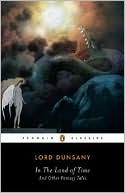
In the Land of Time: And Other Fantasy Tales by Lord Dunsany

This collection isn't perfect: it's too much for one book, and not every piece is equally strong. I do not recommend reading the book cover to cover! But as a survey of the many phases of Dunsany's work, it's very impressive. Dunsany's work is all over the map. I'm very interested in pre-Tolkien fantasy, so this collection was perfect for me.

Part I, the Pegana tales are world-building stories and focus firstly on a group of Olympus-like Gods. Old-fashioned prose influenced by the Bible and Greco-Roman mythology. Favorites: Legend of the Dawn, In the Land of Time, Sardinac, and Babbulkind, a reworking of the Tower of Babel story. These stories work better if you read The Gods of Pegana first.

Part II, Tales of Wonder, include a variety of more traditional fantasy stories. The Sword of Welleran is a stand-out. (However, this section included my least favorite in the collection: Idle Days, Go-By Street, and Perdondaris. Yawn.)

Part III includes mostly short prose poems. I like the first, Where the Tides Ebb and Flow. Many of these pieces try to imagine a future after mankind's demise.

Part IV is probably my favorite period. Dunsany starts taking fantasy ideas in new directions. I recommend every piece. The Wonderful Window is classic. Some of these pieces reminded me of Walter Mitty--The Coronation of Mr. Thomas Shap, for example. Mallington Moor is strong and Bureau d'Echange is very clever. Exiles Club has a nice twist.

Part V rounds up highlights from the author's Jorkens tales. (Club stories--Neil Gaiman has one in his collection Fragile Things.) I esp. enjoyed Our Distant Cousins, more of a SF piece about Mars, which reminded me of Poe's Hans Pfall. (Poe was first with everything.) Rillswood is quite funny.

Lastly, Part VI, Late Tales, a miscellany. Highlights: Policeman's Prophecy (another vision of the world after mankind), the hilarious "The Cut" (about a clever dog), Fairies (not what you expect), and Pirate of the Round Pond which, though somewhat predictable is good fun.

Joshi's selection is excellent, and his notes and introduction are well worth reading, depending on how much you enjoy Dunsany. I enjoyed him immensely and look forward to reading his novel The King of Elfland's Daughter


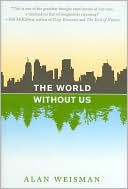
The World Without Us by Alan Weisman

And Weisman really means the world. With its ingeniously hypothetical approach, this book has a thrillingly global reach, considering such places as Poland, the African Rift, Pacific atolls, NYC, Chernobyl, the Gulf Coast, the Korean DMZ, New England, Central America and on and on. This was a slow read at times, but only because there was so much information that was new to me. There would often be 2 or 3 stunners in a single paragraph. Weisman kept messing with my sense of history - the extinction of North American megafauna, the history of the Amazon rainforest, the long and global history of mankind. This book has been a big readjustment. Friends asked, Is it a downer? Honestly, mostly no, though chapters 14-16 were the darkest for me, touching on threats to birds (personally I don't want to imagine a world without songbirds), and the challenge of nuclear waste, to name some standout targets.

I was probably most surprised by the threat which goes by a very silly name: nurdles. (Chapter 9) I guess The Graduate had it too right: the future is plastics. Did you know there's a continent-sized island of the stuff collecting in the Pacific? (In every ocean, actually.)

Still, there's hopefulness in the book--Earth is resilient, that's for certain--and the thrill of learning so much about nature provided me enough joy that I couldn't call the book depressing. Forests come back, species cling tenaciously to life. But society has some huge problems to face. Global warming is the tip of the iceberg.


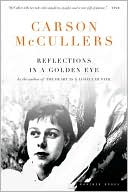
Reflections in a Golden Eye by Carson McCullers

As in The Heart is a Lonely Hunter, McCullers' gift for empathy enables her to realize a stunning array of characters' inner lives. This is Southern Gothic, as noted in the excellent afterword by Tennessee Williams, who deliciously mocks the uptight response common among the literary crowd of the day: "Why do they write about such dreadful things?" (It's also queer in a way that refuses to be pinned down to any one sensibility, i.e. gay, straight, bisexual, trans, male, female.) Although a murder is announced in the first paragraph, you can't quite be sure which of the six major characters committed the crime until the very end. Such is the thorough atmosphere of unease created by McCullers.

Labels: ,

Monday, May 14, 2007

Heinrich von Kleist's The Marquise of O-

After reading about The Marquise of O- and Other Stories by Heinrich von Kleist in Francine Prose's excellent Reading Like a Writer, I decided to read the collection. (Even though it's much harder to find than the Penguin edition, I decided on the Martin Greenberg translation, which includes a preface by Thomas Mann, since that's what Prose quoted extensively and it's what hooked me. It was worth the effort. Greenberg's translation reads with wonderful clarity and directness.) Kleist, a German born in the late 18C, died in his mid-30s, and though he's known also for his drama and to some extent his poetry, I gather it's his fiction which is most often read these days, at least in English. This collection includes all of his fiction, and it represents a stunning achievement.

Prose celebrates Kleist for his opening sentences, which are indeed marvels and have apparently been admired for generations. I'm partial to the action packed opener of "The Earthquake in Chile":
In Santiago, the capital of the kingdom of Chile, at the very moment of the great earthquake of the year 1647 in which many thousands of lives were lost, a young Spaniard by the name of Jeronimo Rugera, who had been locked up on a criminal charge, was standing against a prison pillar, about to hang himself.
And, interestingly, having just searched the web for a copy of the sentence to copy and paste, I found various other translations which I didn't like as much. At any rate, though he often set his stories in the historical past, Kleist's fiction also feels strikingly modern. (Strange to think of him as Austen's contemporary.) Originally devoted to the ideals of the Enlightenment, Kleist apparently read Kant and had something of a meltdown and ended up a severe critic of Enlightenment philosophy. There's something a bit twisted to his sensibility, and in his introduction Greenberg points out that his world seems modern because it's unstable, shifting ("the world seemed flat but it turns out to be round").

I enjoyed every story, though I thought they varied in quality. "The Marquise of O-" has to be read to be believed. It's exceptional (and Prose devotes a lot of space to discussing it) yet I found the ending too cruel to accept. Symbolically, the resolution expresses a profound truth about human nature, but perhaps it's the modern feminist in me who can't accept it on the realistic terms which are the story's main strength up until that point. The novella "Michael Kohlhaas" is likewise an exceptional story, which I felt worked best in its first half, focused as it is on experiences that an ordinary person can more easily relate to. It's the story of a man whose attempt to seek justice is continually thwarted and decides to take the law into his own hands, becoming a vigilante. Interestingly, it's almost an animal rights story, since the initial injustice involves the mistreatment of two of his horses. The agonizingly escalating pitch of Kohlhaas' failed pursuit of justice put me in mind of Kafka, and it turns out Kafka was indeed a big fan. The story also influenced E.L. Doctorow's Ragtime. (If you check IMDb, you'll see Kleist has credits for the movie version as well as for films by Rohmer and Schlondorff.) The story ends with a rather subtle supernatural twist that reminds you he was writing in the Gothic era.

Speaking of the Gothic, "Beggerwoman of Locarno" is a short story that's quite simple yet effective, a bit slight and lacking the kinds of twist I expected but nonetheless interesting. Rightly or not, I couldn't help somewhat favorably comparing "The Engagement in Santo Domingo" to Melville's "Benito Cereno," a story which disappointed me. Both deal with insurrections by slaves--the former in Haiti, the latter at sea. "The Foundling," which includes something of a rivalry between a son and an adopted boy, made for a fascinating comparison with Wuthering Heights, which I read not long ago. I found myself wondering if this story was written partly in reaction to more sentimental tales of poor foundlings made good, because it's quite a dark tale.

"The Earthquake in Chile" is, I think, one of my two favorites in the collection. It's a pure success in narrative. Its consideration of life just after a great public calamity put me in mind of 9/11 and rang absolutely true despite having the shape of an O Henry story. "St. Cecilia" is an interesting story that deals with religion, intolerance and music in a unique combination. Mann praised the story for sending shivers down the spine and expressing the horror of music's power. The final story, "The Duel," is my other favorite. Like the title story, it deals with a woman who knows herself to be innocent but who appears very guilty, and the narrative employs some delicious twists. The chivalric era is skewered, and the idea of religious faith is put to a very memorable test.

Labels: ,

Sunday, March 25, 2007

Zalewski on Bolano

Last year I read Roberto Bolano's Last Evenings on Earth, a collection of stories. I absolutely loved some of them, but others seemed a bit dry or overly text-obsessed. I was certainly often put in mind of Borges. I've been considering reading one of Bolano's longer works--several have been translated lately--and I found this New Yorker essay about Bolano helpful in trying to get a sense of the shape of his career. Several excerpts:
"It’s no coincidence that Bolaño’s most heartbreaking creation—the rebellious, doomed poet at the heart of his 1998 masterwork, 'The Savage Detectives,' which Farrar, Straus has just published in translation—is named Ulises."

"Bolano is notorious in Spanish-speaking countries for having proclaimed that magic realism 'stinks.' He derided Gabriel Garcia Marquez as 'a man terribly pleased to have hobnobbed with so many Presidents and Archbishops'; he called Isabel Allende a 'scribbler' whose 'attempts at literature range from kitsch to the pathetic.' (Allende, interviewed in 2003, dismissed Bolano as an 'extremely unpleasant' man, adding, 'Death does not make you a nicer person.')"

"He helped liberate Latin-American writing from the debased imitations of magic realism that followed the global conquest of Garcia Marquez’s 1967 novel 'One Hundred Years of Solitude'—all those clairvoyant senoritas and intercourse-inspiring moles—and reestablished the primacy of such cosmopolitan experimentalists as Borges and Julio Cortazar. (For Bolano, Cortazar’s moody novel 'Hopscotch' was the Beginning and the End, precisely because it has neither a beginning nor an end.)" [hyperlink mine]

"Bolano’s fiction is, in large part, an ironic mythologization of his personal history, and 'The Savage Detectives' hews closest to what Latin-American writers call the Bolano legend. The novel, which has been given a bracingly idiomatic translation by Natasha Wimmer, is a teeming, 'Manhattan Transfer'-like collage featuring more than fifty narrators, but its first hundred pages are anchored by a single, exuberant voice—that of Juan Garcia Madero, a seventeen-year-old Mexican orphan who, in 1975, abandons his college studies in Mexico City for a group of poet renegades known as the 'visceral realists.'"

"To witness Lacouture’s full breakdown, the reader must turn to 'Amulet,' a slim novel anchored by the same bathroom-stall revelation, which Bolano published in 1999. (More than once, Bolano generated entire novels from episodes in earlier ones.) In the end, the fleshed-out portrait of Lacouture in 'Amulet'—New Directions recently published a translation—is less potent than the hypnotic ten-page cadenza in 'Detectives,' which is enriched by its connection to other tales of political confusion."

"Compared with the sprawling 'Savage Detectives,' most of Bolano’s novels are impressively distilled performances; seven are under two hundred pages. Two of his best short works, 'By Night in Chile' (2000) and 'Distant Star' (1996), have also been published by New Directions. 'By Night in Chile' may be Bolaño’s most searing monologue: a Chilean priest, on his deathbed, attempts to justify a shameful past."

"'Distant Star' handles similar themes, but is more surreal in tone."

"Bolano’s first novels attracted critical praise but few readers; the 1998 publication of 'The Savage Detectives' made him instantly famous. It aroused the same level of excitement in Latin America that 'One Hundred Years of Solitude' had, three decades earlier, and won the Romulo Gallegos Prize, the Spanish-language equivalent of the Booker Prize."

"Growing increasingly ill, he worked for five years on his final, hugely ambitious project: '2666,' conceived as five discrete but linked narratives. In June, 2003, he confessed to a Spanish publication, 'I’m not capable of doing the work that finishing ‘2666’ requires....' He died a month later."

"In the days before his death, Bolano asked his editor to publish the five sections of '2666' individually, in order to secure a sizable inheritance for his children. After consultation with Bolano’s wife, the publisher issued it as a single volume. (The book, which is eleven hundred pages long, is currently being translated by Wimmer.)

Labels:

Tuesday, March 20, 2007

Neil Gaiman's Fragile Things

Just finished Neil Gaiman's Fragile Things, the first book I've ever read by this major fantasy writer, and I very much enjoyed it. Based on this book, which to be fair is a minor work, just a collection of short fiction, I wouldn't call him a great writer, but he's consistently very good, and pop, and clever and likeable and surprising. He bridges American fantasy (including tv/film writing) and British fantasy in an interesting way, and he also combines a pulpy prose style with some literary/metafictional interests. In short, I'd definitely read more. In fact, this collection ends with an American Gods novella, and I'm already planning to check out that novel or perhaps Neverwhere sometime soon.

What struck me most about this collection is Gaiman's ingenuity as a storyteller. He sames to change "the rules" on you in every piece, something I suppose might be more impressive in fantasy, a genre in which figuring out "the rules" of each story is a key part of the experience. My favorites in the collection are: "A Study in Emerald" (of course, since I'm a Sherlock Holmes fan--it's so clever and satisfying I read it twice), "Other People" (a diamondlike short short with a timeless feel) which has a nifty companion called "The Mapmaker" in the introduction, and two poems, "Instructions," which (speaking of rules) lists all kinds of instructions useful if you ever find yourself in a fairy tale, and "Inventing Aladdin," a thoughtful piece about storytelling that made me appreciate the craft anew (and also wonder what it's like to be a Neil Gaiman or a Joss Whedon with everyone always counting on you to wow them yet ready to turn on you the moment you disappoint).

I also highly enjoyed about a dozen or so other stories: "Forbidden Brides of the Faceless Slaves in the Secret House of the Night of Dread Desire" (a sort of inside-out Poe story), "Bitter Grounds," "Keepsakes and Treasures" (a story like the final novella involving the thuggish Mr. Smith and Mr. Alice and which dealt with a legendary male beauty), "The Facts in the Case of the Departure of Miss Finch" (simple amusing), "Harlequin Valentine," "The Problem of Susan" (which taught me something I never knew about the Narnia stories, which I was never able to get through as a kid), "Fifteen Painted Cards from a Vampire Tarot" (highly inventive), "Feeders and Eaters" (gross, I never want to read that again!), "Diseasemaker's Croup," "Goliath" (a story inspired by The Matrix that might be better than at least the sequels, "How to Talk to Girls at Parties" (a bit Whedonesque, I thought), and the previously mentioned novella "Monarch at the Glenn.

Labels: ,

Wednesday, October 06, 2004

A Short Story Bonanza


I've been on a short story reading binge for the last few weeks, catching up on my New Yorker subscription, but also dipping into several collections.

In the pages of recent issues of The New Yorker, I read: a bizarre story by Jonathan Lethem called "Super Goat Man," a surprisingly funny story about having a mother going into a nursing home by Anne Baettie ("The Rabbit Hole as Likely Explanation"), a strong story ("Suckers") by V.S.Naipaul (first writing I've ever read by him) about a middle-aged affair, one sharp with observations about (hetero)sexuality and class, and another story about sexuality by Updike ("Elsie by Starlight"), this one an account of a sexual affair between teens in the 50s. Also read "The Shore," the first fiction I've read by Richard Ford, and for a story about a real estate agent, it was surprisingly compelling. The excellent George Saunders' "Adams" is just about the shortest short I've seen run in the magazine, and I *think* it's an allegory about the US response to 9/11 in the Middle East, but maybe I'm reading too much into it. Joyce Carol Oates' recent "Spider Boy" upset me in the way it combined elements of the New Jersey governor's recent scandal and events from the recent documentary, Capturing the Friedmans. She plays fast and loose with homosexuality and pedophilia, fairly irresponsibly I think, but it's a gripping read.

I was disappointed with the much-praised "The Ordinary Son" by Ron Carlson (Best American Short Stories 2000), a somewhat Salingeresque story of an "ordinary" son in a family of geniuses. Despite some good ideas here and there, it was uncompelling. "Nilda" by Junot Diaz (BASS 2000), however, completely lived up to the amazing stories in his collection of a few years ago, Drown. In fact, it could have been included in that collection. (I was beginning to worry that the success of that book had killed off his writing. Now I guess I still have to worry about whether he can grow as a writer, but if he simply turned out a sequel of shorts as good, I'd be content.)

David Schickler's "The Smoker" (from the collection Kissing in Manhattan, being adapted for the screen by the great Richard Linklater) is not quite a great story, but it is wonderously light and enjoyable, the story of a bachelor English teacher/cinephile at a Manhattan private school and the precocious female student he finds himself tangling with. The story has some troubling undercurrents, and I wouldn't be surprised if Linklater draws them out to create something more substantial.

I also read some absolute stunners:

I sought out "The Destructors" by Graham Greene (from his 21 Stories) because it's mentioned in the film Donnie Darko, which I recently blogged about. The kids discuss the story in a high school English class, and, after what looks like an act of copycat destruction, the kids are considered suspects and the PTA debates censoring the story. Greene's story is a powerful, profoundly dark work that turns masterfully on subtle points of psychological insight. (Its view of group dynamics, especially in the relationship between Blackie and Trevor, is convincing and powerfully cynical.) I found it chilling and complex, right down to its ending. When Donnie observes in class that the children consider destruction a creative act, he is echoing a passage from the narration of the story itself and a major theme of the story. The story takes pains to emphasize the resources the children draw on in order to fulfill a destructive vision

In a collection recently written up in The New York Times and elsewhere, The Anchor Book of New American Short Stories (ed. Ben Marcus), I found several bizarre, sometimes experimental pieces, but only two real stand-outs. First, from the genius George Saunders, "Sea Oak," a brilliantly original work set in a strange alternate version of our world where the hero works at a strip joint and the economy is shit. ("What a stressful workplace. The minute your Cute Rating drops you're a goner. Guests rank us as Knockout, Honeypie, Adequate, or Stinker. Not that I'm complaining. At least I'm working. At least I'm not a stinker like Lloyd.") Then, in addition to the surreal, there's a touch of the supernatural. The story is somehow hilarious and yet at the same time a meditation on the meaning of death in a consumerist society. Second, Mark Richard's "Gentleman's Agreement" (described by The Times as Southern gothic) is the story of a boy who has been warned by his forest fire-fighting father not to throw stones anymore (after he's broken a windshield) or he'd nail his hand to the wall, finds himself unable to resist playing with rocks. The story uses ambiguity to build suspense, but also as a brilliant device of characterization. (It's difficult to discuss shorts without spoiling them!)

Of the three stories I read in Alice Munro's Selected Stories, my favorite was "Walker Brother Cowboy", the powerful slice of life of a family during the Great Depression. After the failure of the family farm, a man works as a door-to-door salesman for Walker Brothers. The story is told from his young daughter's point of view on a day she and her younger brother accompany their father on his rounds, and she learns something new about her father (which may also put her mother in a new light). Subtle and classic, sublimely heartfelt in a way her excellent stories sometimes aren't.

I was also knocked out by "Spring in Fialta" by Vladimir Nabokov (which I read in a decade-old collection I had lying around called, You've Got to Read This: Contemporary American Writers Introduce Stories that Held Them in Awe): a dense, difficult piece about a narrator who is remembering a young woman whom he crossed paths with several times briefly throughout life, starting in pre-revolutionary Russia, then elsewhere in Europe (esp. Paris), then lastly in "Fialta," a fictional city that crosses Fiuma with Yalta. It strikes me as Proustian, from what I know of Proust--the young woman is preserved in this prose as if in amber. Time is fluid, nostalgic and strange. As if in a photo negative, the margins of the narrator's existence seem to become the core of his experience, while his daily life seems to dissolve away, a trivial thing. (And for fan's of Lolita, there's an enchanted moment in the background of the story.)

Lastly, I was delighted by Neil Gaiman's "A Study in Emerald," a (Hugo-nominated) story written for Shadows over Baker Street, a collection of stories with a strange, unlikely premise: to take the character Sherlock Holmes and see how he fares in the world of horror master HP Lovecraft. I'd never read any Lovecraft (though I plan to, soon, just as a point of reference) or, for that matter, any Gaiman, but I've recently come to adore Sherlock Holmes stories. I know there's a huge library of Holmes stories written by authors other than Doyle, and someday when I finish all of Doyle I plan to explore them, but at least with the Holmes movie I'd seen recently--The Adventures of Sherlock Holmes--I'd started to form the opinion that no one can really capture the spirit of Holmes like Doyle. Well, Gaiman fails to quite capture him, either. However, I loved the story. It's a re-working of the original novella that introduced Holmes, A Study in Scarlet (the blood is now green instead of red), which, happily, I'd recently read, and the ending is sensational. That's all I'll say about it.

Looking forward to another short story binge in a few months, after I catch up on a stack of books. Speaking of which, here's a curiosity for you. The biggest book request (aside from the perennials) we seem to be getting at work these days is for The Kite Runner by Khaled Hosseini. Looks like just another well-intentioned book club pick, but we have a long waiting list for it.

Labels:

Sunday, June 13, 2004

Short Readings


The New Yorker cover art
I've been catching up on my short story reading--Yikes! Six months of The New Yorker have accumulated! So far my top recommendations are for "Bohemians" by George Saunders, a tricky little story about a kid, turning on a kid's (unreliable) pov, concerning some interesting characters on the block and what he learns as the truth about them. I could say lots more, but I don't want to be a spoiler. Also was intrigued by Hanif Kureishi's "Long Ago Yesterday," the story of a middle-aged gay man who walks into a pub and meets his middle-aged father. Thing is, his father's long dead. But what would it be like to meet your parents when they were your age? Marty McFly's story was one answer, this is quite another. (Though, actually, there *are* similarities, come to think of it. Ha!) But my favorite so far has been "Cat 'n' Mouse" by Steven Milhauser, a hilarious homage to cat and mouse cartoons like Tom & Jerry. Not only does he perfectly create funny, unique shenanigans in the style of Tom & Jerry and the Roadrunner cartoons, but his translation of them into language is a hoot. What's more, he draws out the underlying metaphysics of the genre with a brilliant deadpan style. So refreshingly unlike anything else I've seen in The New Yorker. In contrast, Mr. New Yorker's recent short story "Delicate Wives" masterfully and economically sketches a memorable cad who seems to be more attracted to women as they become more vulnerable due to illness. Not exactly misogynistic, it's more of a disturbing look at a particular male sexual pathology.

Since I'm being so literary today, may as well include a gem of a poem I've been meaning to share. Poet Rae Armantrout read it in town recently, and it's from her new book Up To Speed. I've been reading a few poems a night, and I have to admit most of these poems are kicking my ass--I'm finding it tough going, but their smarts and originality keep me going. I'm hoping that by the end of the collection they'll start to crack, or that I'll be able to find an interview or review that'll help. Anyway, a few of the poems are written in a more straightforward, prosaic style, and this one is plainly accessible. I like the way it engages pop culture head-on. It's a strong, topsy-turvy reading. Enjoy.

"Next Generations" by Rae Armantrout

1

But, on "Star Trek," we aren't the Borg,

the aggressive conglomerate,

each member part humanoid, part

machine, bent on assimilating

foreign cultures. In fact,

we destroy their ship,

night after night,

in preparation for sleep.


2

We sense something's wrong

when our ideal selves

look like contract players.

The captain plays what's left

of believable authority

as a Shakespearean actor.

The rest are there to show surprise

each time

the invading cube appears--

until any response seems stupid.

But we forgive them.

We've made camp

in the glitch

Labels: